

RCR Wireless
  • News
  • Channels
    • 5G
    • 6G
    • BSS OSS
    • Carriers
    • IoT
    • Network Infrastructure
    • Open RAN
    • Private 5G
    • Telco AI
    • Telco Cloud
    • Test & Measurement
  • Resources
    • Reports
    • Webinars
    • White papers
    • AI Fundamentals
    • Analyst Angle
    • Editorial Calendar
    • Fundamentals
      • 5G NR Release 17
      • AI
        • Telco AI in 2025
    • Podcasts
      • Let’s Get Digital with Carrie Charles
      • Wireless Connectivity to Enable Industry 4.0 for the Middleprise
      • Well Technically…
      • Will 5G Change the World
      • Accelerating Industry 4.0 Digitalization
  • AI Infrastructure
  • Programs
  • Events
  • RCRtv
  • Advertise
  • Subscribe
Wednesday, September 16, 2026
RCR Wireless
  • News
  • Channels
    • 5G
    • 6G
    • BSS OSS
    • Carriers
    • IoT
    • Network Infrastructure
    • Open RAN
    • Private 5G
    • Telco AI
    • Telco Cloud
    • Test & Measurement
  • Resources
    • Reports
    • Webinars
    • White papers
    • AI Fundamentals
    • Analyst Angle
    • Editorial Calendar
    • Fundamentals
      • 5G NR Release 17
      • AI
        • Telco AI in 2025
    • Podcasts
      • Let’s Get Digital with Carrie Charles
      • Wireless Connectivity to Enable Industry 4.0 for the Middleprise
      • Well Technically…
      • Will 5G Change the World
      • Accelerating Industry 4.0 Digitalization
  • AI Infrastructure
  • Programs
  • Events
  • RCRtv
  • Advertise
  • Subscribe
Add RCR Wireless as a preferred source on Google
  • Qualcomm 6G Insights
  • Huawei Content Hub
  • Qualcomm – 6G Vision
  • OSS/BSS Channel
  • RCRTech Roundtable: AI Infrastructure
RCR Wireless
RCR Wireless
  • Advanced Mimo
  • Mobile mmWave
  • 5G Positioning
  • Green Networks
  • Metaverse
  • Automotive
  • Industrial and Wide-area IoT
Copyright 2021 - All Right Reserved
Home - The role of open APIs in digital transformation
FundamentalsNetwork InfrastructureSoftware

The role of open APIs in digital transformation

by Nathan Cranford October 16, 2017
written by Nathan Cranford October 16, 2017 Share
LinkedinEmail
Share 0LinkedinEmail
APIs
175

The shift toward digital transformation

Digital transformation has become a major trend across a host of industries, from healthcare to entertainment, with application program interfaces (APIs) spearheading the transition. According to a report by research firm IDC, by 2020, 50% of Global 2000 will see the bulk of their businesses depend on their ability to create digitally enhanced products, services and experiences. Nevertheless, many organizations are struggling to put digitalization into practice while managing a complex infrastructure consisting of multi-cloud environments. This article explores how APIs are being leveraged to ease the digital transformation process.

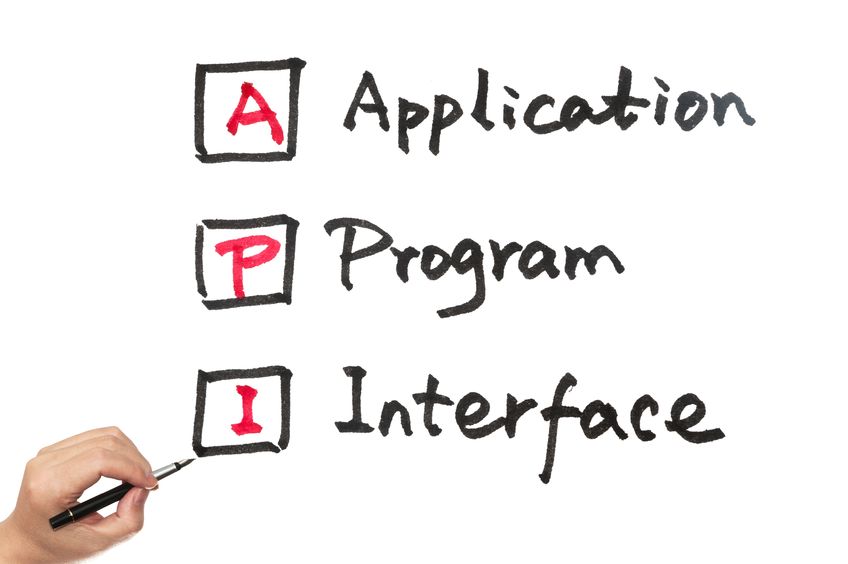
What are APIs?

APIs consist of a pool of tools, resources and directions in an operating system, which allow software developers to extend upon or create new applications. They are typically understood as a code that enables two software programs to communicate with each other. In order to book a flight, for instance, a potential passenger must interact with an airline’s API to obtain access to airline data, flight schedules, routes and ticket prices.

Different types

Not all APIs are created equal, however. Although there are many different types of APIs, they generally fall under the umbrella of three different categories: local APIs, web APIs and program APIs. Local APIs offer middleware services, which allow various applications to communicate through messaging frameworks. TAPI, a technology that allows programmers to develop applications that provide personal telephony to users, is an example of a local API. Web APIs serve as an extensible framework for creating HTTP based services that can be accessed by different applications on various platforms, including the web, window and mobile. And program APIs are founded on a remote procedure call technology, which provides high-level communication but appears as a normal procedure call to the rest of the software.

Benefits

APIs can aid company digital transformation efforts, especially with the switch from legacy infrastructure to a new wave of software updates. According to analyst firm Gartner, for instance, APIs can help decrease friction stirred by bimodal IT, where legacy run-the-business applications (Mode 1) must run alongside solutions with greater flexibility (Mode 2).

“This friction can be minimized by the intelligent use of APIs,” said Paolo Malinverno, research vice president at Gartner. “APIs are the layer through which Mode 1 and Mode 2 can connect, allowing doors to open between the core data and functionality of a Mode 1 application and a more experimental, innovative Mode 2 application.”

Moreover, with more companies leveraging cloud services, APIs can be integrated into public platforms to deploy and manage virtual machines and microservices. In addition, APIs can be automated to handle various workloads, which would otherwise have to be handled manually. Furthermore, APIs allow content to be created, published and deployed across a myriad of channels automatically. Finally, users can optimize APIs in development or test environments, powering an environment down during nights and weekends, and up during mornings.

To learn more about how APIs are enabling digital transformation efforts, check out the video below.


You Might Also Like
  • RAN edge to DC plumbing – Nokia chases AI ‘supercycle’ everywhere
  • AI slow-down? What AI slow-down? (Telco Diary)
  • New 6G clubs, old 5G duds? (Telco Diary)
  • American Tower sees European consolidation as growth opportunity
  • Telcos, remember your roots! (Telco Diary)
  • Nokia campus strategy – from private 5G to private AI? (Telco Diary)

Table of Contents

  • The shift toward digital transformation
  • What are APIs?
  • Different types
  • Benefits
Share 0 LinkedinEmail
Nathan Cranford

Nathan Cranford joined RCR Wireless News as a Technology Writer in 2017. Prior to his current position, he served as a content producer for GateHouse Media, and as a freelance science and tech reporter. His work has been published by a myriad of news outlets, including COEUS Magazine, dailyRx News, The Oklahoma Daily, Texas Writers Journal and VETTA Magazine. Nathan earned a bachelor’s from the University of Oklahoma in 2013. He lives in Austin, Texas.

previous post
Sprint extends satellite-based backhaul contract with Gilat
next post
Cisco: ‘In the IoT space, it’s going to be all about data’

White Papers

  • Norton eBook: The 2026 Telco Playbook

  • Enea White Paper: Why Intelligent AAA is the Swiss Army Knife of Telecom

  • CSG White Paper: Telco AI Enabler: Mediation’s Defining Role

  • Enea White Paper: Scalable Database Design for 5G and Beyond

  • Supermicro and NVIDIA Whitepaper: Powering sovereign AI at scale

Editorial Reports

  • Report: Building 6G — Aligning technology, policy and purpose

  • Report: Rethinking the RAN

  • Report: Building AI-Era Network Fabrics

Webinars

  • Appledore Webinar: Closing the Agent-Ready Data Gap for Autonomous Networks

  • Mimosa Webinar – Build the Right Network

  • Webinar: Building 6G — aligning technology, policy and purpose

  • SIMCom Webinar: Scaling your next deployment – from plastic to provisioning

  • Webinar: Rethinking the RAN as AI, cloud and openness converge

Since 1982, RCR Wireless News has been providing wireless and mobile industry news, insights, and analysis to mobile and wireless industry professionals, decision makers, policy makers, analysts and investors.

Facebook Twitter Youtube Linkedin Envelope Rss

Useful Links

  • Subscribe
  • About RCR Wireless News
  • Contact Us
  • Advertise
  • Editorial Calendar
  • Archive
  • RSS
  • Wireless News Archive
  • Subscribe
  • About RCR Wireless News
  • Contact Us
  • Advertise
  • Editorial Calendar
  • Archive
  • RSS
  • Wireless News Archive

Edtior's Picks

Samsung and Verizon complete first AI-powered ISAC trial on vRAN
Regional carriers face tech and spectrum tests to remain competitive, says CCA
RAN edge to DC plumbing – Nokia chases AI ‘supercycle’ everywhere

Latest Articles

Samsung and Verizon complete first AI-powered ISAC trial on vRAN
Regional carriers face tech and spectrum tests to remain competitive, says CCA
RAN edge to DC plumbing – Nokia chases AI ‘supercycle’ everywhere
The Agentic Network — Orange on the maturity path to autonomy

© 2026 RCR Wireless News All Right Reserved. Developed by Eight Hats.

Cookie Policy | Privacy Policy

RCR Wireless
  • News
  • Channels
    • 5G
    • 6G
    • BSS OSS
    • Carriers
    • IoT
    • Network Infrastructure
    • Open RAN
    • Private 5G
    • Telco AI
    • Telco Cloud
    • Test & Measurement
  • Resources
    • Reports
    • Webinars
    • White papers
    • AI Fundamentals
    • Analyst Angle
    • Editorial Calendar
    • Fundamentals
      • 5G NR Release 17
      • AI
        • Telco AI in 2025
    • Podcasts
      • Let’s Get Digital with Carrie Charles
      • Wireless Connectivity to Enable Industry 4.0 for the Middleprise
      • Well Technically…
      • Will 5G Change the World
      • Accelerating Industry 4.0 Digitalization
  • AI Infrastructure
  • Programs
  • Events
  • RCRtv
  • Advertise
  • Subscribe
RCR Wireless
  • News
  • Channels
    • 5G
    • 6G
    • BSS OSS
    • Carriers
    • IoT
    • Network Infrastructure
    • Open RAN
    • Private 5G
    • Telco AI
    • Telco Cloud
    • Test & Measurement
  • Resources
    • Reports
    • Webinars
    • White papers
    • AI Fundamentals
    • Analyst Angle
    • Editorial Calendar
    • Fundamentals
      • 5G NR Release 17
      • AI
        • Telco AI in 2025
    • Podcasts
      • Let’s Get Digital with Carrie Charles
      • Wireless Connectivity to Enable Industry 4.0 for the Middleprise
      • Well Technically…
      • Will 5G Change the World
      • Accelerating Industry 4.0 Digitalization
  • AI Infrastructure
  • Programs
  • Events
  • RCRtv
  • Advertise
  • Subscribe
@2020 - All Right Reserved. Designed and Developed by PenciDesign
