
RCR Wireless
  • News
  • Channels
    • 5G
    • 6G
    • BSS OSS
    • Carriers
    • IoT
    • Network Infrastructure
    • Open RAN
    • Private 5G
    • Telco AI
    • Telco Cloud
    • Test & Measurement
  • Resources
    • Reports
    • Webinars
    • White papers
    • AI Fundamentals
    • Analyst Angle
    • Editorial Calendar
    • Fundamentals
      • 5G NR Release 17
      • AI
        • Telco AI in 2025
    • Podcasts
      • Let’s Get Digital with Carrie Charles
      • Wireless Connectivity to Enable Industry 4.0 for the Middleprise
      • Well Technically…
      • Will 5G Change the World
      • Accelerating Industry 4.0 Digitalization
  • AI Infrastructure
  • Programs
  • Events
  • RCRtv
  • Advertise
  • Subscribe
Tuesday, August 18, 2026
RCR Wireless
  • News
  • Channels
    • 5G
    • 6G
    • BSS OSS
    • Carriers
    • IoT
    • Network Infrastructure
    • Open RAN
    • Private 5G
    • Telco AI
    • Telco Cloud
    • Test & Measurement
  • Resources
    • Reports
    • Webinars
    • White papers
    • AI Fundamentals
    • Analyst Angle
    • Editorial Calendar
    • Fundamentals
      • 5G NR Release 17
      • AI
        • Telco AI in 2025
    • Podcasts
      • Let’s Get Digital with Carrie Charles
      • Wireless Connectivity to Enable Industry 4.0 for the Middleprise
      • Well Technically…
      • Will 5G Change the World
      • Accelerating Industry 4.0 Digitalization
  • AI Infrastructure
  • Programs
  • Events
  • RCRtv
  • Advertise
  • Subscribe
Add RCR Wireless as a preferred source on Google
  • Qualcomm 6G Insights
  • Huawei Content Hub
  • Qualcomm – 6G Vision
  • OSS/BSS Channel
  • RCRTech Roundtable: AI Infrastructure
RCR Wireless
RCR Wireless
  • Advanced Mimo
  • Mobile mmWave
  • 5G Positioning
  • Green Networks
  • Metaverse
  • Automotive
  • Industrial and Wide-area IoT
Copyright 2021 - All Right Reserved
Home - What are APIs and how do they work?
FundamentalsNetwork InfrastructureSoftware

What are APIs and how do they work?

by Nathan Cranford November 8, 2017
written by Nathan Cranford November 8, 2017 Share
LinkedinEmail
Share 0LinkedinEmail
APIs
109

Introduction

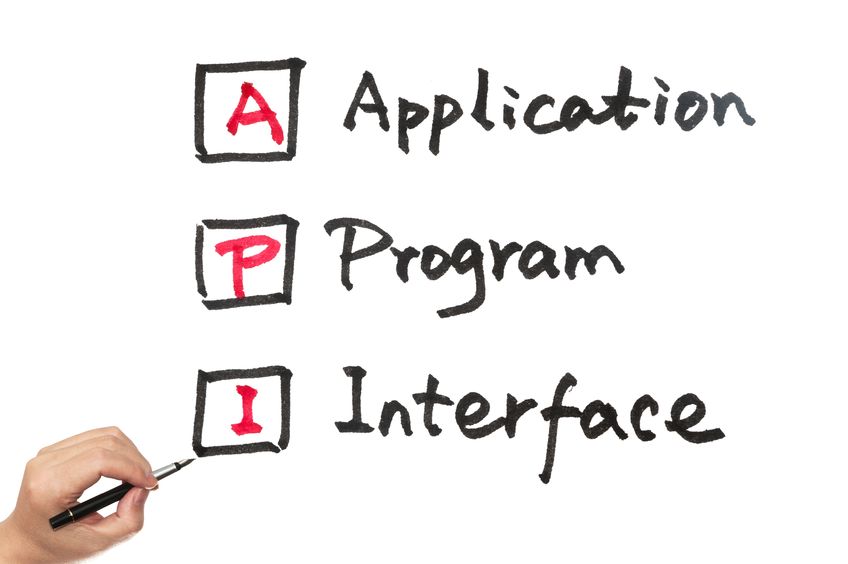
Application program interfaces (APIs) are becoming a major part of the internet. Although the technology has been around for years, the API market has witnessed explosive growth in recent memory. According to an IDC survey of IT and business professionals sponsored by Axway, 47% of respondents said they use APIs as an integration technology, 45% as a SaaS integration technology and 39% as a channel mechanism for their business. With so many software companies investing in APIs, it is important to have a solid understanding of how the technology works. The following ,therefore, explores what exactly APIs are and why they are important.

What are APIs?

APIs are essentially a universal plug that allows users to use a device in any socket. Commercial websites will give developers pieces of code to enable them to create tools for a website. The code developers are provided is dubbed an API, while the tools that developers make with the API are dubbed applications. Developers can use various APIs to build various tools in a variety of ways.

Take booking a plane ticket as an example. In order to book a flight, an individual needs to select a type of airline, a departure and return city, a date, a time, a seat, meal preference, among other factors. Customers will access the airline’s website in making these decisions. To gain access to the flight’s information, users have to interact with the airline’s API, which serves as an interface that sends the data from the application the user is using to the airline’s system over the web. In short, APIs provide connectivity by transmitting data from one device to the next.

Benefits

Developers are significantly more efficient with APIs than when they had to write large amounts of code ex nihilo. Using APIs, developers do not have to write an entire new code each time they create a new program. Rather, they can focus on what exactly makes the application unique and outsource commodity functionality to APIs. Computers use APIs to view and edit data in the same way a person can. The only difference is computers are able to leverage APIs to perform various tasks that would usually take a human hours.

Another benefit of APIs is they provide a host site with several interesting features for free, while enabling developers to promote their work and boost a company’s profile. Several of these applications are created by businesses with their own site, such as smaller companies with less traffic. With APIs, companies are able to widen their ecosystem, potentially tapping into new markets in return.

Challenges

That doesn’t mean APIs aren’t without drawbacks, however. Companies are able to shut down or limit services that applications depend on at anytime. In 2012, for example, Twitter restricted third-party developers use of its APIs in order to foster a “consistent Twitter experience.” Other companies like Google will completely shut down an application if they are not profiting from it. Moreover, APIs can be difficult to test in the cloud, which can clash with cloud resource mapping.

Different types

Not all APIs are created equal either. Java APIs, for example, allow objects to exchange information with each other in the Java programming language. In addition, there are Web APIs like Simple Object Access Protocol (SOAP), Remote Procedure Call (RPC) and Representational State Transfer (REST). According to Programmable Web, there are approximately 15,000 publicly available APIs with hundreds of thousands of private APIs. Business ought to be aware of the different types of APIs in choosing which kind works best for them.

You Might Also Like
  • Criss-cross comms – Lumen bets on east-west AI, while the edge keeps north-south in play
  • Thursday (telco diary) | Ghosts in the machine – Wanted: more humans to build AI
  • Lumen ready for AI traffic rush – with programmable fabric and “more fiber than anyone”
  • AI fiber build-out undermines rural BEAD skills-drive
  • Wednesday (telco diary) | Smells like team spirit – and that tech-bro Musk
  • Tuesday (telco diary) | About open RAN, c/o Dell’Oro…

Table of Contents

  • Introduction
  • What are APIs?
  • Benefits
  • Challenges
  • Different types
Share 0 LinkedinEmail
Nathan Cranford

Nathan Cranford joined RCR Wireless News as a Technology Writer in 2017. Prior to his current position, he served as a content producer for GateHouse Media, and as a freelance science and tech reporter. His work has been published by a myriad of news outlets, including COEUS Magazine, dailyRx News, The Oklahoma Daily, Texas Writers Journal and VETTA Magazine. Nathan earned a bachelor’s from the University of Oklahoma in 2013. He lives in Austin, Texas.

previous post
What can gigabit LTE do for me?
next post
Rockwell Automation invests in smart manufacturing AI, analytics

White Papers

  • Norton eBook: The 2026 Telco Playbook

  • Enea White Paper: Why Intelligent AAA is the Swiss Army Knife of Telecom

  • CSG White Paper: Telco AI Enabler: Mediation’s Defining Role

  • Enea White Paper: Scalable Database Design for 5G and Beyond

  • Supermicro and NVIDIA Whitepaper: Powering sovereign AI at scale

Editorial Reports

  • Report: NTN in motion — evolving standards, expanding services

  • Market Pulse Report: Telco AI in 2026 – Trends, Challenges and Opportunities

  • Nvidia Report: The State of AI in Telecommunications: 2026 Trends

Webinars

  • Webinar: Building 6G — aligning technology, policy and purpose

  • SIMCom Webinar: Scaling your next deployment – from plastic to provisioning

  • Webinar: Rethinking the RAN as AI, cloud and openness converge

  • Webinar: Scale-Up, Scale-Out, Scale-Across – Building AI-Era Network Fabrics

  • Webinar: NTN in motion – evolving standards, expanding services

Since 1982, RCR Wireless News has been providing wireless and mobile industry news, insights, and analysis to mobile and wireless industry professionals, decision makers, policy makers, analysts and investors.

Facebook Twitter Youtube Linkedin Envelope Rss

Useful Links

  • Subscribe
  • About RCR Wireless News
  • Contact Us
  • Advertise
  • Editorial Calendar
  • Archive
  • RSS
  • Wireless News Archive
  • Subscribe
  • About RCR Wireless News
  • Contact Us
  • Advertise
  • Editorial Calendar
  • Archive
  • RSS
  • Wireless News Archive

Edtior's Picks

Omdia: Mission critical networks demand more: Rethink your OSS and BSS
TM Forum report – IT with intent: the interconnected future of telco operations
Business Value Pathways

Latest Articles

Omdia: Mission critical networks demand more: Rethink your OSS and BSS
TM Forum report – IT with intent: the interconnected future of telco operations
Business Value Pathways
Preparing base station antenna sites for the 5G-Advanced and AI era (Analyst Angle) 

© 2026 RCR Wireless News All Right Reserved. Developed by Eight Hats.

Cookie Policy | Privacy Policy

RCR Wireless
  • News
  • Channels
    • 5G
    • 6G
    • BSS OSS
    • Carriers
    • IoT
    • Network Infrastructure
    • Open RAN
    • Private 5G
    • Telco AI
    • Telco Cloud
    • Test & Measurement
  • Resources
    • Reports
    • Webinars
    • White papers
    • AI Fundamentals
    • Analyst Angle
    • Editorial Calendar
    • Fundamentals
      • 5G NR Release 17
      • AI
        • Telco AI in 2025
    • Podcasts
      • Let’s Get Digital with Carrie Charles
      • Wireless Connectivity to Enable Industry 4.0 for the Middleprise
      • Well Technically…
      • Will 5G Change the World
      • Accelerating Industry 4.0 Digitalization
  • AI Infrastructure
  • Programs
  • Events
  • RCRtv
  • Advertise
  • Subscribe
RCR Wireless
  • News
  • Channels
    • 5G
    • 6G
    • BSS OSS
    • Carriers
    • IoT
    • Network Infrastructure
    • Open RAN
    • Private 5G
    • Telco AI
    • Telco Cloud
    • Test & Measurement
  • Resources
    • Reports
    • Webinars
    • White papers
    • AI Fundamentals
    • Analyst Angle
    • Editorial Calendar
    • Fundamentals
      • 5G NR Release 17
      • AI
        • Telco AI in 2025
    • Podcasts
      • Let’s Get Digital with Carrie Charles
      • Wireless Connectivity to Enable Industry 4.0 for the Middleprise
      • Well Technically…
      • Will 5G Change the World
      • Accelerating Industry 4.0 Digitalization
  • AI Infrastructure
  • Programs
  • Events
  • RCRtv
  • Advertise
  • Subscribe
@2020 - All Right Reserved. Designed and Developed by PenciDesign

