

T-band spectrum used in 11 metro areas still slated for give-back
Once upon a time in a Congress far, far away, public safety users were asking a national, interoperable mobile broadband network of their own. All right, said the congressional powers-that-be – we’ll set aside Band 14 at 700 MHz for your network and give you $7 billion from a future spectrum auction to build your network – but there is a price. WIthin nine years, 11 cities must give up some shared, licensed spectrum so that the Federal Communications Commission can auction it for commercial use by 2022 — and Congress wrote that requirement was written into the law that established the First Responders Network Authority.
That Rumpelstiltskin-esque bargain is essentially the story of the T-band at 470-512 MHz. The fate of the T-band is perhaps the most top-of-mind spectrum issue for public safety, with public safety advocates still hoping that Congress will avert the give-back and allow first responders and others to continue operating in the band. This is of particular concern the eleven metropolitan areas where the T-band is in use: New York City and northeastern New Jersey; Los Angeles and San Francisco/Oakland, Calif.; Chicago, Ill.; Boston, Mass.; Houston and Dallas/Fort Worth, Tex.; Miami, Fla.; Philadelphia and Pittsburgh, Penn.; and the greater Washington, D.C., area including parts of Maryland and Virginia.
The FCC has said that there are 925 public safety agencies that hold T-Band licenses, including the largest police and fire departments in the nation. Users – including TV channels, public safety and business and industrial users — are maintaining their operations, but for the most part, cannot expand under Federal Communications Commission rules.
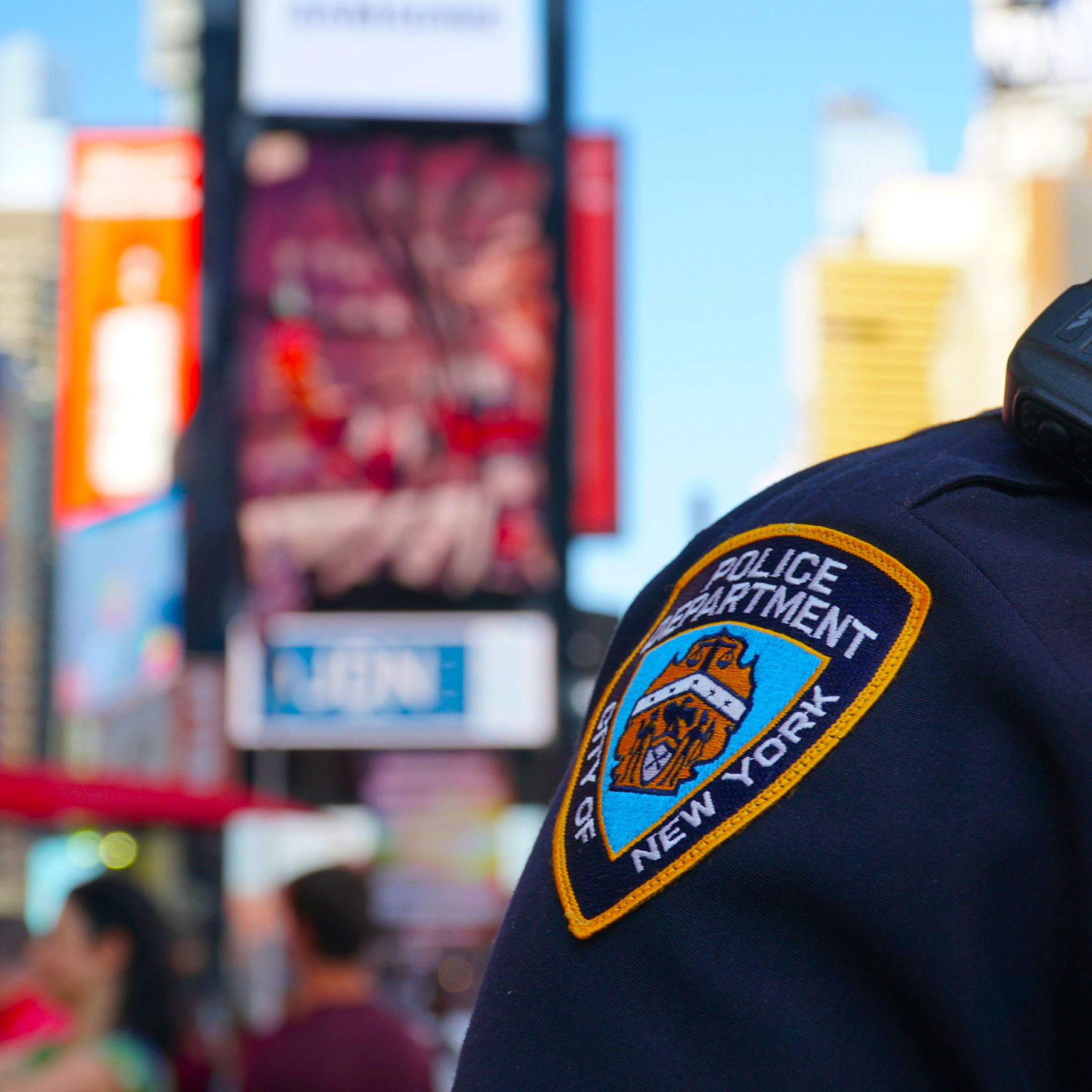
In a 2016 ex parte filing, representatives of New York City’s Emergency Management agency, NYFD NYPD and the city’s IT department expressed to the FCC that NYC first responders are “heavily and completely reliant on mission critical voice communications in the 470-512 MHz public safety spectrum. First responders use the spectrum every day, all day” and that it is used for 911 dispatching and is “fully integrated into 911 platforms and below ground mass transit systems.”
“Relocation of operations to alternative spectrum will strand significant investment in the current system and equipment and cause major operational impacts,” NYC representatives said in the filing.
The deadline for the FCC to start auction proceedings of the T-band is Feb. 22, 2021, with relocation to take place within two years after the auction. No particular spectrum was named as a new home for T-band operators, although there were some options in 700 MHz narrowband (not enough to accommodate the amount of channels needed, according to public safety advocates) and it was thought at the time that the future public safety LTE network might be a workable option by the time the give-back came around — but FirstNet is not yet in a position to be a replacement for LMR voice. Meanwhile, public safety advocates have been trying to convince Congress to let those cities keep their T-band licenses – although there could be some complications from the fact that the repacking of 600 MHz spectrum means that more television stations will be operating in that shared spectrum with public safety, potentially leading to more interference in their systems. (1)
The National Public Safety Telecommunications Council, a federally-supported consortium of organizations that focus on public safety communications technologies and interoperability, has noted that clearing public safety users from the band did not necessarily mean that the bands would be usable — there are industrial and business (I/B) users in the band as well. The Enterprise Wireless Alliance, which has been working on behalf of T-Band licensees for a number of years, commissioned a study by Televate in 2013 on the I/B users and found that there were 573 I/B licensees and 764 separate systems – all of which have been under a freeze of their operations. Televate’s 2013 study found that the cost of relocating the I/B systems would be “impacted at a cost of $449 million” if they were to require to be moved to dedicated portion of the spectrum, while NPSTC estimated the cost of relocating public safety users at $5.9 billion in early 2013.
An updated 2016 NPSTC report on the T-band concluded that “public safety’s strong demand for T-band spectrum is virtually unchanged” since its report three years prior, and that while the FCC had in the meantime made 24 more narrowband channels available at 700 MHz, those channels “pale in comparison to the channels to be re-accommodated in at least the top five T-band areas,” NPSTC said.
Some type of action on the T-band has bipartisan support – at least from New York, which obviously has a large interest in keeping its agencies on the T-band frequencies. House Bill 5085, the “Don’t Break up the T-Band Act of 2018,” was introduced at the U.S. House of Representatives in February by Representatives Eliot Engle (D-NY), Lee Zeldin (R-NY) and Peter King (R-NY) to repeal the requirement that the T-band be auctioned.
Verizon has come out in support of that legislation, with Robert Fische, Verizon’s SVP for federal government affairs writing that the T-band “has limited commercial value for mobile broadband. It is, however, critically important to public safety agencies” and urging the House Energy and Commerce Committee to “take prompt action on the bill in order to provide the nation’s first responders with the assurance that their communications systems will not be adversely affected.”
When the Land Mobile Communications Council representatives met with staff from the Public Safety and Homeland Security Bureau and the Wireless Telecommunications Bureau in January of this year, they “expressed the hope that the commission will provide guidance in 2018 about how it intends to procced with the implementation … which mandates the auctioning of public safety spectrum in the 470-512 MHz band and relocation of those systems. The many licensees operating both public safety and industrial/business systems in that band are increasingly concerned about their critical communications as the auction deadline approaches without the identification of spectrum to which they could be relocated,” LMCC said in an ex parte filing.
NPSTC in particular is focused on advocating for Congress to allow public safety to keep the T-band, according to NPSTC Chairman Ralph Haller, as well as in making 4.9 GHz more usable for public safety.
“There’s no other frequency available for them to go to,” Haller said. “If they lose the T-band, they lose their police communications and fire and EMS — so it’s a very big deal. … It makes no sense to take an important tool like the T-Band away from the first responders, and we’re very hopeful that Congress will see that and revoke the requirement that public safety leave that band.”
1) Source: Mission Critical Partners white paper, T-Band Licensees in Top MSAs.
Looking for more info on what’s going on in public safety communications? Register for the RCR Wireless News webinar on next week and keep an eye out for our upcoming special report.
Image: 123RF stock photo


