
RCR Wireless
  • News
  • Channels
    • 5G
    • 6G
    • BSS OSS
    • Carriers
    • IoT
    • Network Infrastructure
    • Open RAN
    • Private 5G
    • Telco AI
    • Telco Cloud
    • Test & Measurement
  • Resources
    • Reports
    • Webinars
    • White papers
    • AI Fundamentals
    • Analyst Angle
    • Editorial Calendar
    • Fundamentals
      • 5G NR Release 17
      • AI
        • Telco AI in 2025
    • Podcasts
      • Let’s Get Digital with Carrie Charles
      • Wireless Connectivity to Enable Industry 4.0 for the Middleprise
      • Well Technically…
      • Will 5G Change the World
      • Accelerating Industry 4.0 Digitalization
  • AI Infrastructure
  • Programs
  • Events
  • RCRtv
  • Advertise
  • Subscribe
Monday, August 17, 2026
RCR Wireless
  • News
  • Channels
    • 5G
    • 6G
    • BSS OSS
    • Carriers
    • IoT
    • Network Infrastructure
    • Open RAN
    • Private 5G
    • Telco AI
    • Telco Cloud
    • Test & Measurement
  • Resources
    • Reports
    • Webinars
    • White papers
    • AI Fundamentals
    • Analyst Angle
    • Editorial Calendar
    • Fundamentals
      • 5G NR Release 17
      • AI
        • Telco AI in 2025
    • Podcasts
      • Let’s Get Digital with Carrie Charles
      • Wireless Connectivity to Enable Industry 4.0 for the Middleprise
      • Well Technically…
      • Will 5G Change the World
      • Accelerating Industry 4.0 Digitalization
  • AI Infrastructure
  • Programs
  • Events
  • RCRtv
  • Advertise
  • Subscribe
Add RCR Wireless as a preferred source on Google
  • Qualcomm 6G Insights
  • Huawei Content Hub
  • Qualcomm – 6G Vision
  • OSS/BSS Channel
  • RCRTech Roundtable: AI Infrastructure
RCR Wireless
RCR Wireless
  • Advanced Mimo
  • Mobile mmWave
  • 5G Positioning
  • Green Networks
  • Metaverse
  • Automotive
  • Industrial and Wide-area IoT
Copyright 2021 - All Right Reserved
Home - Arianespace launches satellites for improved internet and mobility services
Network Infrastructure

Arianespace launches satellites for improved internet and mobility services

by Catherine Sbeglia Nin August 2, 2021
written by Catherine Sbeglia Nin August 2, 2021 Share
LinkedinEmail
Share 0LinkedinEmail
Arianespace satellite
Image courtesy of Arianespace.
106

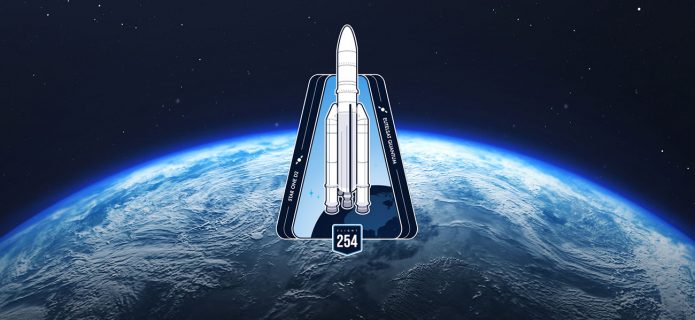
The launch included the Star One D2 satellite and the Eutelsat Quantum satellite

Last week, Arianespace successfully launched a pair of communications satellites — Star One D2 and Eutelsat Quantum — into geostationary orbit around the Earth for two of the company’s customers: Embratel, the largest satellite operator in Brazil and Latin America and Eutelsat, a European satellite operator.

Built by Maxar Technologies, Star One D2 is described by Arianespace  as “a high-capacity, multi-mission satellite with Ku-, Ka-, C- and X-band transponders that will enable it to expand broadband coverage to new regions in Central and South America, provide internet access to underserved populations and add an updated X-band payload for government use over the Atlantic region.”

The company also stated that the satellite will improve access to high-quality services, serving the parabolic fleet in Brazil, Pay TV, cell phone backhaul, data, video and Internet for corporate customers and government agencies.

The Eutelsat Quantum satellite, developed under a public-private partnership between the European Space Agency (ESA), operator Eutelsat and Airbus Defense and Space, uses a software-based design and features an electronically steerable receiving antenna. It operates in Ku-band with eight independent reconfigurable beams, allowing the operator to reconfigure in-orbit the radio-frequency beams over the coverage zones, providing “unprecedented flexibility in data, government and mobility services.”

The Friday mission used the Ariane 5 heavy-lift launcher and took off from Europe’s Spaceport in Kourou, French Guiana, carrying both the Star One D2 and Quantum satellites into geostationary orbit. Sometime later, the company tweeted that its first pasagner, Star One D2, successfully separated, followed later by an announcement that the Eutelsat Quantum also successfully separated.

Separation is now confirmed for our first passenger: Star One D2!
Stay tuned for the next step of tonight’s mission!#VA254@Arianegroup @embratel @Maxar pic.twitter.com/fMDn08ebOs

— Arianespace (@Arianespace) July 30, 2021

We just received confirmation that our second passenger, EUTELSAT QUANTUM, successfully separated!#VA254@Arianegroup @embratel @Maxar @Eutelsat_SA @AirbusSpace @esa @esa_sts @EsaTelecoms @CNES pic.twitter.com/X3MX8q5V61

— Arianespace (@Arianespace) July 30, 2021

This wasn’t an entirely new project for Arianespace. Prior to Friday’s launch, Arianespace had already orbited 11 satellites for Embratel and 35 satellites for Eutelsat.

Satellites are becoming increasingly offered as possibly tools to improve global connectivity, particularly in rural and hard-to-reach locations. Last April, for instance, Arianespace competitor SpaceX, Elon Musk’s private American aerospace company, launched an additional 60 Starlink satellites into orbit, bringing the total number of satellites in the Starlink constellation to 422. That’s enough, Musk said at the time, to provide minimal internet coverage.

Unlike Arianespace’s satellites, which are geostationary satellites, Starlink satellites are Low earth orbit (LEO) satellites, which hover at a lower orbital height, making them more viable for commercial broadband connectivity. Geostationary satellites, however, are thought capable of providing more reliable services to mobility focussed industries, like aviation and maritime, causing many to believe that a combination of these types of satellites is the best solution.

One such supporter of this strategy is Inmarsat, which announced last week that it will launch between 150 and 175 LEOs to compliment its existing geostationary devices, calling such an architecture “Orchestra.”

“An orchestra brings different instruments together, each supporting the other and playing its role in the masterpiece. We’re building Orchestra on the same concept,” said Rajeev Suri, CEO of Inmarsat. “By combining the distinct qualities of (Geostationary Orbit) GEO, LEO and 5G into a single network, we will deliver a service that is far greater than the sum of its parts. Our customers will benefit from dramatically expanded high-throughput services around the world.”


You Might Also Like
  • Criss-cross comms – Lumen bets on east-west AI, while the edge keeps north-south in play
  • Thursday (telco diary) | Ghosts in the machine – Wanted: more humans to build AI
  • Lumen ready for AI traffic rush – with programmable fabric and “more fiber than anyone”
  • AI fiber build-out undermines rural BEAD skills-drive
  • Wednesday (telco diary) | Smells like team spirit – and that tech-bro Musk
  • Tuesday (telco diary) | About open RAN, c/o Dell’Oro…
Share 0 LinkedinEmail
Catherine Sbeglia Nin

Catherine Sbeglia Nin is the Managing Editor for RCR Wireless News, where she covers topics such as Wi-Fi, network infrastructure, AI and edge computing. She also produced and hosted Arden Media's podcast Well, technically... After studying English and Film & Media Studies at The University of Rochester, she moved to Madison, WI. Having already lived on both coasts, she thought she’d give the middle a try. So far, she likes it very much.

previous post
5G manufacturing use case spotlight: Automated guided vehicles
next post
Editorial Webinar: Minding the mid-band: C Band and CBRS efforts

White Papers

  • Norton eBook: The 2026 Telco Playbook

  • Enea White Paper: Why Intelligent AAA is the Swiss Army Knife of Telecom

  • CSG White Paper: Telco AI Enabler: Mediation’s Defining Role

  • Enea White Paper: Scalable Database Design for 5G and Beyond

  • Supermicro and NVIDIA Whitepaper: Powering sovereign AI at scale

Editorial Reports

  • Report: NTN in motion — evolving standards, expanding services

  • Market Pulse Report: Telco AI in 2026 – Trends, Challenges and Opportunities

  • Nvidia Report: The State of AI in Telecommunications: 2026 Trends

Webinars

  • Webinar: Building 6G — aligning technology, policy and purpose

  • SIMCom Webinar: Scaling your next deployment – from plastic to provisioning

  • Webinar: Rethinking the RAN as AI, cloud and openness converge

  • Webinar: Scale-Up, Scale-Out, Scale-Across – Building AI-Era Network Fabrics

  • Webinar: NTN in motion – evolving standards, expanding services

Since 1982, RCR Wireless News has been providing wireless and mobile industry news, insights, and analysis to mobile and wireless industry professionals, decision makers, policy makers, analysts and investors.

Facebook Twitter Youtube Linkedin Envelope Rss

Useful Links

  • Subscribe
  • About RCR Wireless News
  • Contact Us
  • Advertise
  • Editorial Calendar
  • Archive
  • RSS
  • Wireless News Archive
  • Subscribe
  • About RCR Wireless News
  • Contact Us
  • Advertise
  • Editorial Calendar
  • Archive
  • RSS
  • Wireless News Archive

Edtior's Picks

Lockheed’s NetSense turns Verizon’s 5G network into a drone-tracking system
Criss-cross comms – Lumen bets on east-west AI, while the edge keeps north-south...
Fighting talk (and team spirit) – Celona preps private 5G/Wi-Fi for AI scramble...

Latest Articles

Lockheed’s NetSense turns Verizon’s 5G network into a drone-tracking system
Criss-cross comms – Lumen bets on east-west AI, while the edge keeps north-south in play
Fighting talk (and team spirit) – Celona preps private 5G/Wi-Fi for AI scramble in Industry 4.0
The Agentic Network — T-Mobile US on aligning AI initiatives with customer outcomes

© 2026 RCR Wireless News All Right Reserved. Developed by Eight Hats.

Cookie Policy | Privacy Policy

RCR Wireless
  • News
  • Channels
    • 5G
    • 6G
    • BSS OSS
    • Carriers
    • IoT
    • Network Infrastructure
    • Open RAN
    • Private 5G
    • Telco AI
    • Telco Cloud
    • Test & Measurement
  • Resources
    • Reports
    • Webinars
    • White papers
    • AI Fundamentals
    • Analyst Angle
    • Editorial Calendar
    • Fundamentals
      • 5G NR Release 17
      • AI
        • Telco AI in 2025
    • Podcasts
      • Let’s Get Digital with Carrie Charles
      • Wireless Connectivity to Enable Industry 4.0 for the Middleprise
      • Well Technically…
      • Will 5G Change the World
      • Accelerating Industry 4.0 Digitalization
  • AI Infrastructure
  • Programs
  • Events
  • RCRtv
  • Advertise
  • Subscribe
RCR Wireless
  • News
  • Channels
    • 5G
    • 6G
    • BSS OSS
    • Carriers
    • IoT
    • Network Infrastructure
    • Open RAN
    • Private 5G
    • Telco AI
    • Telco Cloud
    • Test & Measurement
  • Resources
    • Reports
    • Webinars
    • White papers
    • AI Fundamentals
    • Analyst Angle
    • Editorial Calendar
    • Fundamentals
      • 5G NR Release 17
      • AI
        • Telco AI in 2025
    • Podcasts
      • Let’s Get Digital with Carrie Charles
      • Wireless Connectivity to Enable Industry 4.0 for the Middleprise
      • Well Technically…
      • Will 5G Change the World
      • Accelerating Industry 4.0 Digitalization
  • AI Infrastructure
  • Programs
  • Events
  • RCRtv
  • Advertise
  • Subscribe
@2020 - All Right Reserved. Designed and Developed by PenciDesign
