
RCR Wireless
  • News
  • Channels
    • 5G
    • 6G
    • BSS OSS
    • Carriers
    • IoT
    • Network Infrastructure
    • Open RAN
    • Private 5G
    • Telco AI
    • Telco Cloud
    • Test & Measurement
  • Resources
    • Reports
    • Webinars
    • White papers
    • AI Fundamentals
    • Analyst Angle
    • Editorial Calendar
    • Fundamentals
      • 5G NR Release 17
      • AI
        • Telco AI in 2025
    • Podcasts
      • Let’s Get Digital with Carrie Charles
      • Wireless Connectivity to Enable Industry 4.0 for the Middleprise
      • Well Technically…
      • Will 5G Change the World
      • Accelerating Industry 4.0 Digitalization
  • AI Infrastructure
  • Programs
  • Events
  • RCRtv
  • Advertise
  • Subscribe
Tuesday, August 25, 2026
RCR Wireless
  • News
  • Channels
    • 5G
    • 6G
    • BSS OSS
    • Carriers
    • IoT
    • Network Infrastructure
    • Open RAN
    • Private 5G
    • Telco AI
    • Telco Cloud
    • Test & Measurement
  • Resources
    • Reports
    • Webinars
    • White papers
    • AI Fundamentals
    • Analyst Angle
    • Editorial Calendar
    • Fundamentals
      • 5G NR Release 17
      • AI
        • Telco AI in 2025
    • Podcasts
      • Let’s Get Digital with Carrie Charles
      • Wireless Connectivity to Enable Industry 4.0 for the Middleprise
      • Well Technically…
      • Will 5G Change the World
      • Accelerating Industry 4.0 Digitalization
  • AI Infrastructure
  • Programs
  • Events
  • RCRtv
  • Advertise
  • Subscribe
Add RCR Wireless as a preferred source on Google
  • Qualcomm 6G Insights
  • Huawei Content Hub
  • Qualcomm – 6G Vision
  • OSS/BSS Channel
  • RCRTech Roundtable: AI Infrastructure
RCR Wireless
RCR Wireless
  • Advanced Mimo
  • Mobile mmWave
  • 5G Positioning
  • Green Networks
  • Metaverse
  • Automotive
  • Industrial and Wide-area IoT
Copyright 2021 - All Right Reserved
Home - How big data can save money and our environment
EnergyFundamentalsInternet of Things (IoT)

How big data can save money and our environment

by Phillip Tracy August 2, 2016
written by Phillip Tracy August 2, 2016 Share
LinkedinEmail
Share 0LinkedinEmail
source: IBM/Youtube
121

A growing problem with a win-win solution

Society is far from reaching its greenhouse gas emissions goals. And, as part of the effort to reshape how energy is produced and used, big data can help prevent a potentially disastrous environmental forecast.

Atmospheric concentration of greenhouse gases are estimated to reach almost 685 parts per million (ppm) by 2050, well above the concentration level of 450 ppm required to have at least a 50% chance of stabilizing the climate at a 2 degrees Celsius global average temperature increase, the goal set at the 2010 United Nations Framework Convention on Climate Change in Cancún.

Joraultechy/Youtube

Joraultechy/Youtube

In fact, global average temperature is likely to exceed this goal by 2050, and by three degrees to six degrees Celsius higher than pre-industrial levels by the end of the century. Such a high temperature increase would continue to alter precipitation patterns, melt glaciers, cause sea-level rise and intensify extreme weather events. It might also exceed some critical “tipping-points,” causing dramatic natural changes that could have catastrophic or irreversible outcomes for natural systems and society, according to the Organization for Economic Co-Operation and Development.

The organization says that, given the current trends, energy-related emissions will increase by 70% by 2050 due to an 80% increase in demand for energy, largely derived from increased demand for cars in developing countries.

That demand presents huge potential for stakeholders in the industry, and energy corporations will need to use big data to maximize their ROI.

Using big data to increase income and decrease footprint

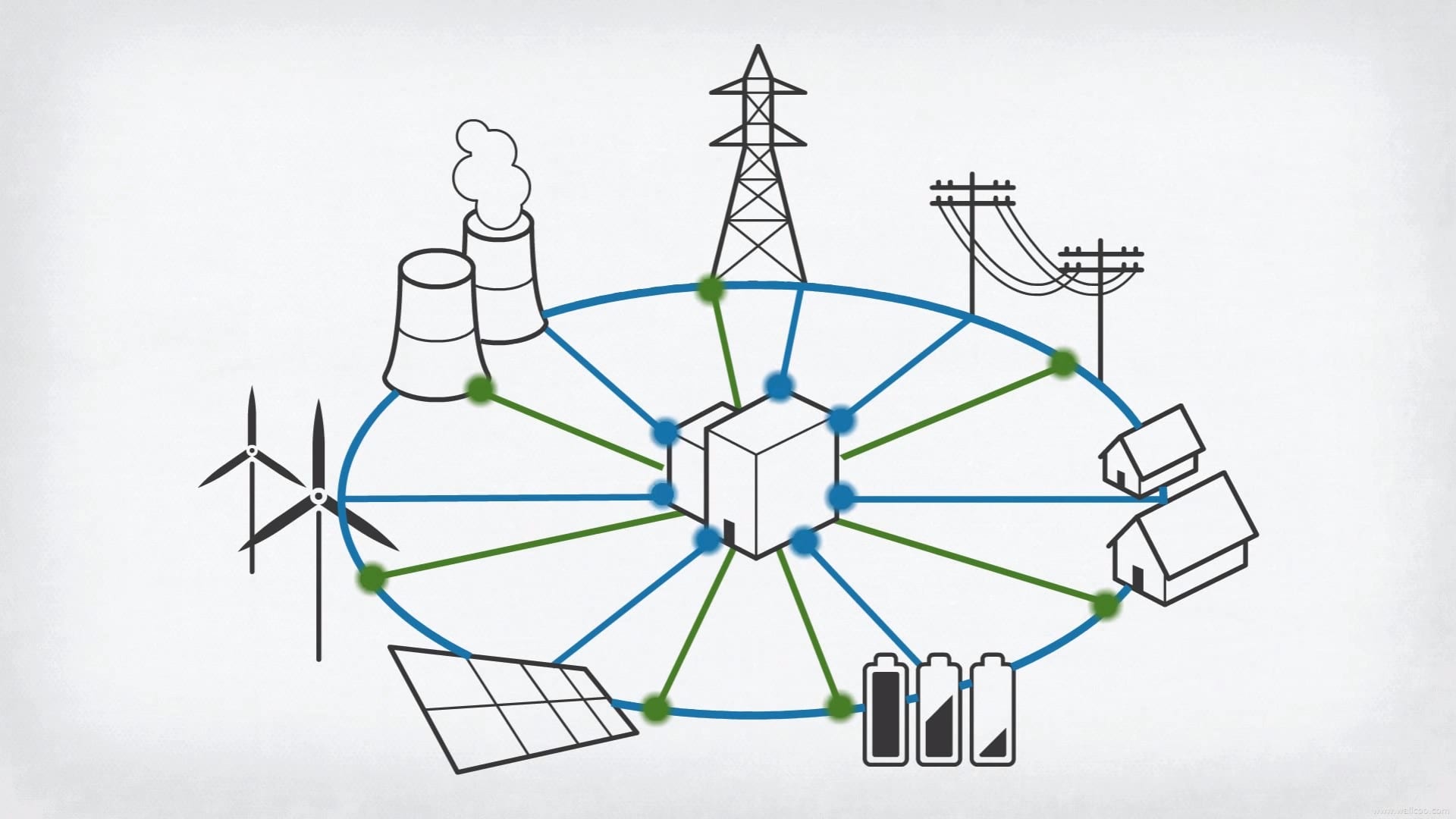
The power grid is constantly getting smarter with data, and the need for technology to create, crunch and analyze energy data continues continues to grow.

Utility companies that are able to harness actionable information from highly diverse data can reap significant benefit. For those companies with equipment including generators and transmission operators, the advantages include, according to Sungard, a financial software company:

  • Better utilization/optimization of generation assets reducing the need to invest capital in new power plants
  • Improved grid balancing reducing stresses on power transmission facilities and improving reliability
  • Improved predictive equipment analytics reducing likelihood of failure of key, high value assets

Reducing energy usage and saving money

The Wharton School’s online business journal reported that if smart meters were incorporated across the U.S. they would generate five times the data of the current AT&T network. However, Accenture consultants estimate that if the same smart meters could, if properly deployed, save each electricity customer $40 to $70 per year.

A 2010 McKinsey & Company study said that a holistic energy-efficiency program would produce energy savings worth more than $1.2 trillion, reducing end-use consumption in 2020 by 9.1 quadrillion British Thermal Units and eliminating up to 1.1 gigatons of greenhouse gas every year.

In addition to reducing energy consumption, big data analysis can improve the efficiency of the energy industry itself. According to SAS, a privately held software company with a 12-acre solar farm, the drilling analytics it provided for one national oil and natural gas company increased foot-per-day penetration by 12% and cut nonproductive time by 18%.

https://www.youtube.com/watch?v=pdrQDOhjF24

For energy, that means using smart meters to track consumption, analyzing traffic data to reduce congestion and intelligently incorporating renewable energy into the grid.  On a smaller level, a single business owner can have piece of mind that they are spending the minimum amount on energy by allowing automation to optimize energy processes: are the lights shutting off when the building is unoccupied? Is the economizer turning on when it should? Are ducts leaking? Sophisticated software can identify problems, in many cases much more comprehensively than an on-site energy audit, and generate work orders if needed to reduce overhead time.

Energy efficiency has been in the spotlight for decades, particularly in regard to buildings, which today account for 42% of the world’s energy use, according to the University of Pennsylvania.  Facility managers rely on building management systems (BMS) to gather data about building performance and energy usage in their quest to reduce operating and maintenance costs, improve building comfort, and save energy.

Successful example showing the benefits of big data

The energy management systems market will be worth an estimated $38 billion by 2018, according to Markets to Markets. That includes everything from residential to retail energy monitoring.

Virginia-based Opower is one of themost successful companies in the energy management space. Opower began by offering homeowners the chance to compare their power use to those of their neighbors, to discover whether they were energy hogs or energy saints. Just the contextualizing effect of knowing how you compared to others—along with Opower’s energy efficiency tips—was enough to encourage most homeowners to reduce waste, according to Time.

Last month software giant Oracle announced that it planned to buy Opower. Other energy data startups like eMeter, have been acquired by power companies like Siemens at high prices.

You Might Also Like
  • Physical AI is exposing a data sovereignty gap (Reader Forum)
  • Japan’s private 5G market is finally moving beyond demo experiments (Analyst Angle)
  • Monday (telco diary) | Sovereign AI for Industry 4.0
  • When the push becomes the pull – private 5G and physical AI
  • Fast-growing private 5G offers blueprint for AI-era telecoms
  • Monday (telco diary) | Consolidation, orchestration, automation

Table of Contents

  • A growing problem with a win-win solution
  • Using big data to increase income and decrease footprint
  • Reducing energy usage and saving money
  • Successful example showing the benefits of big data
Share 0 LinkedinEmail
Phillip Tracy

previous post
How big data can save our depleting water supply
next post
Verizon partners with Bharti Airtel to push digital content into India

White Papers

  • Norton eBook: The 2026 Telco Playbook

  • Enea White Paper: Why Intelligent AAA is the Swiss Army Knife of Telecom

  • CSG White Paper: Telco AI Enabler: Mediation’s Defining Role

  • Enea White Paper: Scalable Database Design for 5G and Beyond

  • Supermicro and NVIDIA Whitepaper: Powering sovereign AI at scale

Editorial Reports

  • Report: Building AI-Era Network Fabrics

  • Quantum Safe Networks Market Pulse Report

  • Report: NTN in motion — evolving standards, expanding services

Webinars

  • Mimosa Webinar – Build the Right Network

  • Webinar: Building 6G — aligning technology, policy and purpose

  • SIMCom Webinar: Scaling your next deployment – from plastic to provisioning

  • Webinar: Rethinking the RAN as AI, cloud and openness converge

  • Webinar: Scale-Up, Scale-Out, Scale-Across – Building AI-Era Network Fabrics

Since 1982, RCR Wireless News has been providing wireless and mobile industry news, insights, and analysis to mobile and wireless industry professionals, decision makers, policy makers, analysts and investors.

Facebook Twitter Youtube Linkedin Envelope Rss

Useful Links

  • Subscribe
  • About RCR Wireless News
  • Contact Us
  • Advertise
  • Editorial Calendar
  • Archive
  • RSS
  • Wireless News Archive
  • Subscribe
  • About RCR Wireless News
  • Contact Us
  • Advertise
  • Editorial Calendar
  • Archive
  • RSS
  • Wireless News Archive

Edtior's Picks

Lightyear launches Dispatch, an agentic AI platform for enterprise telecom
The smart apartment era is ending. The smart building contract is next (Analyst...
Mimosa Webinar – Build the Right Network

Latest Articles

Lightyear launches Dispatch, an agentic AI platform for enterprise telecom
The smart apartment era is ending. The smart building contract is next (Analyst Angle)
Mimosa Webinar – Build the Right Network
ZTE’s computing business drives H1 growth as carrier spending weakens

© 2026 RCR Wireless News All Right Reserved. Developed by Eight Hats.

Cookie Policy | Privacy Policy

RCR Wireless
  • News
  • Channels
    • 5G
    • 6G
    • BSS OSS
    • Carriers
    • IoT
    • Network Infrastructure
    • Open RAN
    • Private 5G
    • Telco AI
    • Telco Cloud
    • Test & Measurement
  • Resources
    • Reports
    • Webinars
    • White papers
    • AI Fundamentals
    • Analyst Angle
    • Editorial Calendar
    • Fundamentals
      • 5G NR Release 17
      • AI
        • Telco AI in 2025
    • Podcasts
      • Let’s Get Digital with Carrie Charles
      • Wireless Connectivity to Enable Industry 4.0 for the Middleprise
      • Well Technically…
      • Will 5G Change the World
      • Accelerating Industry 4.0 Digitalization
  • AI Infrastructure
  • Programs
  • Events
  • RCRtv
  • Advertise
  • Subscribe
RCR Wireless
  • News
  • Channels
    • 5G
    • 6G
    • BSS OSS
    • Carriers
    • IoT
    • Network Infrastructure
    • Open RAN
    • Private 5G
    • Telco AI
    • Telco Cloud
    • Test & Measurement
  • Resources
    • Reports
    • Webinars
    • White papers
    • AI Fundamentals
    • Analyst Angle
    • Editorial Calendar
    • Fundamentals
      • 5G NR Release 17
      • AI
        • Telco AI in 2025
    • Podcasts
      • Let’s Get Digital with Carrie Charles
      • Wireless Connectivity to Enable Industry 4.0 for the Middleprise
      • Well Technically…
      • Will 5G Change the World
      • Accelerating Industry 4.0 Digitalization
  • AI Infrastructure
  • Programs
  • Events
  • RCRtv
  • Advertise
  • Subscribe
@2020 - All Right Reserved. Designed and Developed by PenciDesign

