

RCR Wireless
  • News
  • Channels
    • 5G
    • 6G
    • BSS OSS
    • Carriers
    • IoT
    • Network Infrastructure
    • Open RAN
    • Private 5G
    • Telco AI
    • Telco Cloud
    • Test & Measurement
  • Resources
    • Reports
    • Webinars
    • White papers
    • AI Fundamentals
    • Analyst Angle
    • Editorial Calendar
    • Fundamentals
      • 5G NR Release 17
      • AI
        • Telco AI in 2025
    • Podcasts
      • Let’s Get Digital with Carrie Charles
      • Wireless Connectivity to Enable Industry 4.0 for the Middleprise
      • Well Technically…
      • Will 5G Change the World
      • Accelerating Industry 4.0 Digitalization
  • AI Infrastructure
  • Programs
  • Events
  • RCRtv
  • Advertise
  • Subscribe
Sunday, September 13, 2026
RCR Wireless
  • News
  • Channels
    • 5G
    • 6G
    • BSS OSS
    • Carriers
    • IoT
    • Network Infrastructure
    • Open RAN
    • Private 5G
    • Telco AI
    • Telco Cloud
    • Test & Measurement
  • Resources
    • Reports
    • Webinars
    • White papers
    • AI Fundamentals
    • Analyst Angle
    • Editorial Calendar
    • Fundamentals
      • 5G NR Release 17
      • AI
        • Telco AI in 2025
    • Podcasts
      • Let’s Get Digital with Carrie Charles
      • Wireless Connectivity to Enable Industry 4.0 for the Middleprise
      • Well Technically…
      • Will 5G Change the World
      • Accelerating Industry 4.0 Digitalization
  • AI Infrastructure
  • Programs
  • Events
  • RCRtv
  • Advertise
  • Subscribe
Add RCR Wireless as a preferred source on Google
  • Qualcomm 6G Insights
  • Huawei Content Hub
  • Qualcomm – 6G Vision
  • OSS/BSS Channel
  • RCRTech Roundtable: AI Infrastructure
RCR Wireless
RCR Wireless
  • Advanced Mimo
  • Mobile mmWave
  • 5G Positioning
  • Green Networks
  • Metaverse
  • Automotive
  • Industrial and Wide-area IoT
Copyright 2021 - All Right Reserved
Home - Meet LTE-R, the network responsible for next-generation smart trains
FeaturedFundamentalsInternet of Things (IoT)LTE

Meet LTE-R, the network responsible for next-generation smart trains

by Phillip Tracy November 15, 2016
written by Phillip Tracy November 15, 2016 Share
LinkedinEmail
Share 0LinkedinEmail
nokia huawei smart transport
708

GSM-R, an aging railway standard

In 2000, the railway companies of Europe sat down to finish up the creation of a cost-efficient and interoperable standard for communication between trains. The aim was to replace all analog systems then in use. They laid down the requirements in the specifications, the basis on which the present day GSM-R standard is built.

source: Nokia

source: Nokia

Being the only standard for digital railway communications, GSM-R is used today throughout Europe, Asia, North Africa and Australia, replacing dozens of legacy standards, according to GSMR. A claimed 70,000 kilometers of track are covered by GSM-R all around the globe, with that figure expected to increase, according to a 2014 report by UIC.org. It is expected the roll out of GSM-R on the European network will be complete by 2018.

Welcoming the high-speed LTE-R for smart trains

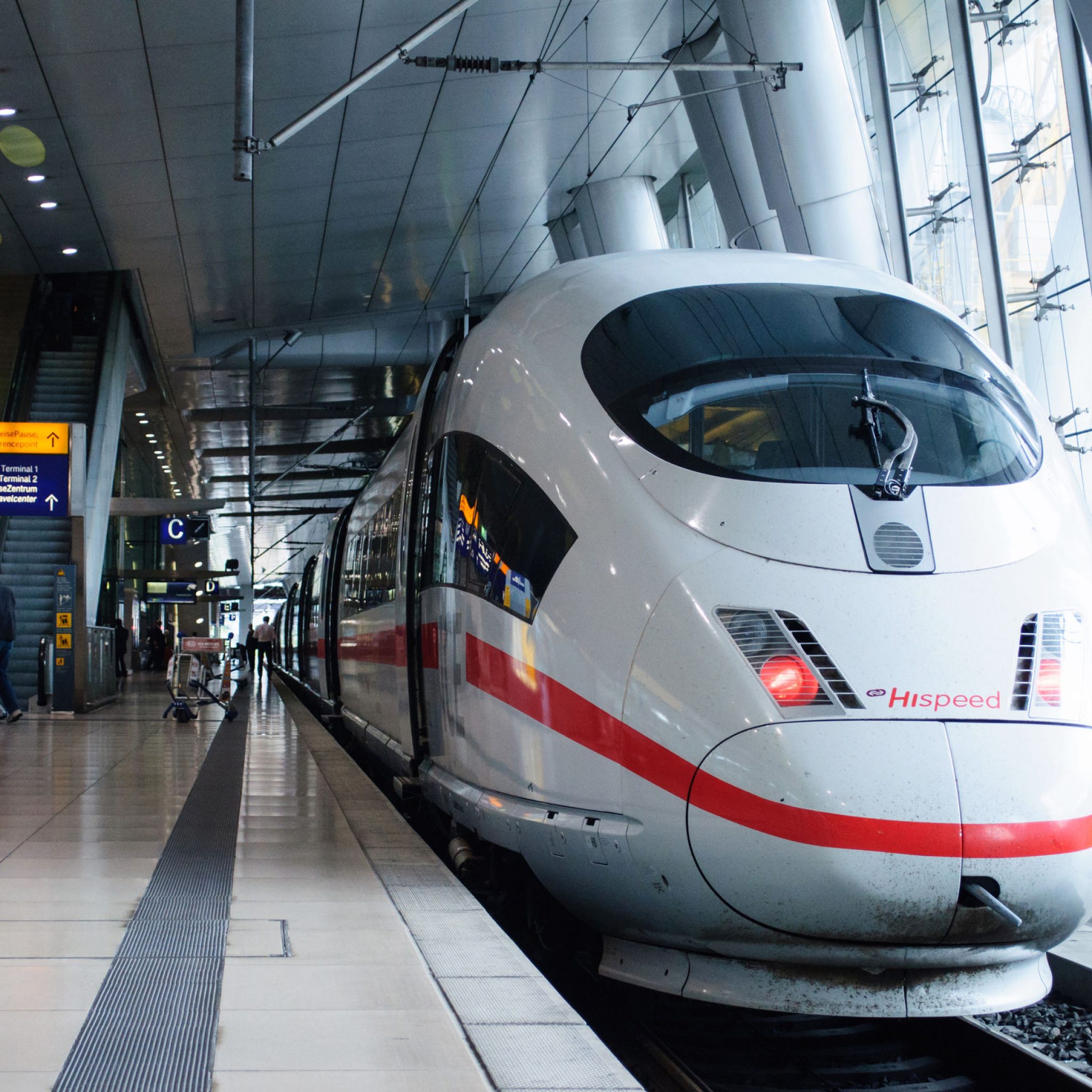
But the long-lived and reliable network will soon be surpassed by yet another version of LTE in the form of LTE-R, a high-speed network specifically mapped out for railway usage and the creation of smart trains. Earlier this month, Nokia was selected by the Korea Rail Network Authority  as the supplier for the world’s first LTE-R mobile broadband network to support railway operations and employee services. The network will be deployed on a railway line between Wonju and Gangneung as part of preparations for the Winter Olympics in 2018.

The KRNA communications network will be based on LTE-R technology, a version of LTE being developed to meet the mission-critical service requirements of railway operators. The network will support both operational and maintenance services on a high-speed commercial railway line operating at speeds of up to 250 kph.

source: IRSE

source: IRSE

The primary characteristics of LTE – high speed, high security and high-bandwidth capacity – allow it to carry voice and data for train control, on-board video surveillance and infotainment services for passengers on a single IP network. LTE has latency as 10 milliseconds allowing for support of time-sensitive applications and providing quality of service management, according to Nokia. It can be deployed in many different frequency bands and has multiple features related to encryption and authentication for security purposes.

The Nokia LTE Ground-to-Train for Railways solution is composed of a core network: evolved packet core and an access radio network UMTS terrestrial radio access network. EPC is a native all-IP-based and multi-access network designed to support the deployment and operation of a common network for every kind of Third Generation Partnership Project access network (2G, 3G and LTE), and even non-3GPP in the form of Wi-Fi. E-UTRAN LTE is connected to the EPC core network in packet mode.

Nokia mapped out the benefits of its LTE Ground-to-Train Network for smart trains. For railway authorities and operators this includes improved information about train movement, schedules and condition; common system and interface for multiple services said to reduce training and maintenance time; and is a future-ready technology. For passengers the benefits are said to include on-board internet access and infotainment services; improved security with on-board video services; and real-time passenger information.

And it is not just Nokia aiming at providing a railway network that can replace GSM-R:

Samsung LTE-R

source: Samsung

source: Samsung

Samsung LTE-R is a railway-dedicated, wireless communications network solution designed to support voice communication among drivers, control center operators, maintenance and other railway staff supporting; push-to-talk group communication, broadcasting, location-dependent addressing and multilevel prioritization; data communication for the train control signaling and other operation and maintenance as well as text messaging during voice communication; multimedia communication for wireless video surveillance, mobile video conference, file sharing, mobile office and passenger infotainment services.

Ericsson tests

Swedish vendor Ericsson and Bombardier in August, completed trials of LTE networks for smart trains solutions at simulated speeds of up to 200 kph. Eleven tests were conducted in a laboratory to determine the ability of the LTE networks to support communications-based train control and multiservice solutions such as closed-circuit television, voice, platform information, advertising and Wi-Fi for passengers.

CBTC uses high-resolution location determination and high-capacity data communications – such as those enabled by LTE networks – to support automatic train protection, operation and supervision functions.

Huawei EWBB LTE for railways

Huawei said its EWBB LTE solution is designed to provide broadband services exceeding capabilities of standard GSM-R. Video surveillance solutions installed on the train and along the track or on platforms are said to help improve railway services and customer satisfaction by allowing centralized security staff to monitor individual trains. At the same time, the system can be configured to deliver broadband wireless connectivity to passengers, allowing them to access travel information and internet services during the trip, or watch live TV.

source: Huawei

source: Huawei

You Might Also Like
  • 6G Forum 2026
  • Intelligent RAN Forum 2026
  • Physical AI is exposing a data sovereignty gap (Reader Forum)
  • Japan’s private 5G market is finally moving beyond demo experiments (Analyst Angle)
  • Monday (telco diary) | Sovereign AI for Industry 4.0
  • When the push becomes the pull – private 5G and physical AI

Table of Contents

  • GSM-R, an aging railway standard
  • Welcoming the high-speed LTE-R for smart trains
  • Samsung LTE-R
  • Ericsson tests
  • Huawei EWBB LTE for railways
Share 0 LinkedinEmail
Phillip Tracy

previous post
Meet LTE-R, the network responsible for next-generation smart trains
next post
In-building wireless: The role of shared spectrum and neutral host small cells

White Papers

  • Norton eBook: The 2026 Telco Playbook

  • Enea White Paper: Why Intelligent AAA is the Swiss Army Knife of Telecom

  • CSG White Paper: Telco AI Enabler: Mediation’s Defining Role

  • Enea White Paper: Scalable Database Design for 5G and Beyond

  • Supermicro and NVIDIA Whitepaper: Powering sovereign AI at scale

Editorial Reports

  • Report: Building 6G — Aligning technology, policy and purpose

  • Report: Rethinking the RAN

  • Report: Building AI-Era Network Fabrics

Webinars

  • Appledore Webinar: Closing the Agent-Ready Data Gap for Autonomous Networks

  • Mimosa Webinar – Build the Right Network

  • Webinar: Building 6G — aligning technology, policy and purpose

  • SIMCom Webinar: Scaling your next deployment – from plastic to provisioning

  • Webinar: Rethinking the RAN as AI, cloud and openness converge

Since 1982, RCR Wireless News has been providing wireless and mobile industry news, insights, and analysis to mobile and wireless industry professionals, decision makers, policy makers, analysts and investors.

Facebook Twitter Youtube Linkedin Envelope Rss

Useful Links

  • Subscribe
  • About RCR Wireless News
  • Contact Us
  • Advertise
  • Editorial Calendar
  • Archive
  • RSS
  • Wireless News Archive
  • Subscribe
  • About RCR Wireless News
  • Contact Us
  • Advertise
  • Editorial Calendar
  • Archive
  • RSS
  • Wireless News Archive

Edtior's Picks

Metro fiber, “kick-ass” 5G, a little DCI and D2D – AT&T sets its...
Nokia hints at new campus-AI strategy, raises questions about its old campus-5G one
American Tower sees AI, 5G, and spectrum driving infra demand

Latest Articles

Metro fiber, “kick-ass” 5G, a little DCI and D2D – AT&T sets its course
Nokia hints at new campus-AI strategy, raises questions about its old campus-5G one
American Tower sees AI, 5G, and spectrum driving infra demand
High bandwidth, high fidelity: Vertex 6.0 delivers emulation for ISAC, 6G and more

© 2026 RCR Wireless News All Right Reserved. Developed by Eight Hats.

Cookie Policy | Privacy Policy

RCR Wireless
  • News
  • Channels
    • 5G
    • 6G
    • BSS OSS
    • Carriers
    • IoT
    • Network Infrastructure
    • Open RAN
    • Private 5G
    • Telco AI
    • Telco Cloud
    • Test & Measurement
  • Resources
    • Reports
    • Webinars
    • White papers
    • AI Fundamentals
    • Analyst Angle
    • Editorial Calendar
    • Fundamentals
      • 5G NR Release 17
      • AI
        • Telco AI in 2025
    • Podcasts
      • Let’s Get Digital with Carrie Charles
      • Wireless Connectivity to Enable Industry 4.0 for the Middleprise
      • Well Technically…
      • Will 5G Change the World
      • Accelerating Industry 4.0 Digitalization
  • AI Infrastructure
  • Programs
  • Events
  • RCRtv
  • Advertise
  • Subscribe
RCR Wireless
  • News
  • Channels
    • 5G
    • 6G
    • BSS OSS
    • Carriers
    • IoT
    • Network Infrastructure
    • Open RAN
    • Private 5G
    • Telco AI
    • Telco Cloud
    • Test & Measurement
  • Resources
    • Reports
    • Webinars
    • White papers
    • AI Fundamentals
    • Analyst Angle
    • Editorial Calendar
    • Fundamentals
      • 5G NR Release 17
      • AI
        • Telco AI in 2025
    • Podcasts
      • Let’s Get Digital with Carrie Charles
      • Wireless Connectivity to Enable Industry 4.0 for the Middleprise
      • Well Technically…
      • Will 5G Change the World
      • Accelerating Industry 4.0 Digitalization
  • AI Infrastructure
  • Programs
  • Events
  • RCRtv
  • Advertise
  • Subscribe
@2020 - All Right Reserved. Designed and Developed by PenciDesign
