

RCR Wireless
  • News
  • Channels
    • 5G
    • 6G
    • BSS OSS
    • Carriers
    • IoT
    • Network Infrastructure
    • Open RAN
    • Private 5G
    • Telco AI
    • Telco Cloud
    • Test & Measurement
  • Resources
    • Reports
    • Webinars
    • White papers
    • AI Fundamentals
    • Analyst Angle
    • Editorial Calendar
    • Fundamentals
      • 5G NR Release 17
      • AI
        • Telco AI in 2025
    • Podcasts
      • Let’s Get Digital with Carrie Charles
      • Wireless Connectivity to Enable Industry 4.0 for the Middleprise
      • Well Technically…
      • Will 5G Change the World
      • Accelerating Industry 4.0 Digitalization
  • AI Infrastructure
  • Programs
  • Events
  • RCRtv
  • Advertise
  • Subscribe
Monday, September 7, 2026
RCR Wireless
  • News
  • Channels
    • 5G
    • 6G
    • BSS OSS
    • Carriers
    • IoT
    • Network Infrastructure
    • Open RAN
    • Private 5G
    • Telco AI
    • Telco Cloud
    • Test & Measurement
  • Resources
    • Reports
    • Webinars
    • White papers
    • AI Fundamentals
    • Analyst Angle
    • Editorial Calendar
    • Fundamentals
      • 5G NR Release 17
      • AI
        • Telco AI in 2025
    • Podcasts
      • Let’s Get Digital with Carrie Charles
      • Wireless Connectivity to Enable Industry 4.0 for the Middleprise
      • Well Technically…
      • Will 5G Change the World
      • Accelerating Industry 4.0 Digitalization
  • AI Infrastructure
  • Programs
  • Events
  • RCRtv
  • Advertise
  • Subscribe
Add RCR Wireless as a preferred source on Google
  • Qualcomm 6G Insights
  • Huawei Content Hub
  • Qualcomm – 6G Vision
  • OSS/BSS Channel
  • RCRTech Roundtable: AI Infrastructure
RCR Wireless
RCR Wireless
  • Advanced Mimo
  • Mobile mmWave
  • 5G Positioning
  • Green Networks
  • Metaverse
  • Automotive
  • Industrial and Wide-area IoT
Copyright 2021 - All Right Reserved
Home - Introducing DSRC: Vehicles are more high tech (and potentially dangerous) than you think
Connected CarsOpinion

Introducing DSRC: Vehicles are more high tech (and potentially dangerous) than you think

by Larry Alton August 21, 2018
written by Larry Alton August 21, 2018 Share
LinkedinEmail
Share 0LinkedinEmail
DSRC
154

For many years, vehicles have been running on software, relying on wireless networks to function, but those networks have been local and closed. With a car operating on a local network, you can’t use your cellphone, tap into your car’s wireless network, and access the internet. At least, not without a special device and a monthly fee.

Using software to control a vehicle’s functions isn’t new, but advancements in wireless technology are giving drivers less control over their cars, unbeknownst to drivers. Safety features like collision warning systems and automatic braking systems are hiding a secret that is both amazing and frightening.

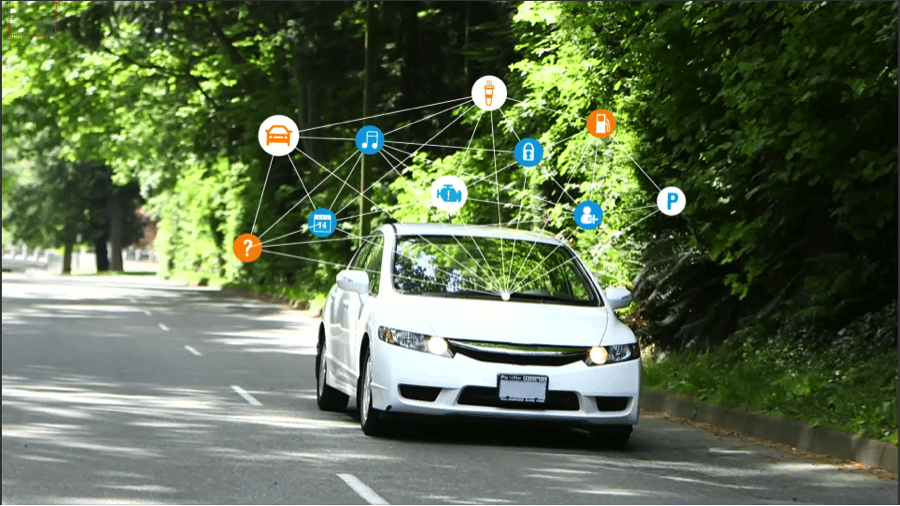
Newer, high-end cars are being equipped with a complex wireless technology known as Dedicated Short-Range Communications (DSRC). This technology enables vehicles to communicate with each other on the road, without tapping into cell towers or any outside infrastructure.

Auto Talks describes this technology, stating “each vehicle sends 10 times per second its location, heading and speed in a secure and anonymous manner. All surrounding vehicles receive the message, and each estimates the risk imposed by the transmitting vehicle.” The risks are calculated and acted upon by safety applications like “Left Turn Assistance” and “Intersection Movement Assistance.”

Although this technology is reportedly encrypted and anonymous, there’s cause for concern. Vehicle software is already known to be hackable, with people having gained remote control of a car’s brakes and other functions. The pressing question is whether DSRC is necessary, or have we gone too far with wireless?

Wireless is unavoidably infiltrating our lives

No matter where you go, you can’t escape wireless technology. What started out as a way to get computers to communicate with each other without a tangled mess of wires has avalanched into a lifestyle you can’t avoid. As with every emerging technology, there are pros and cons. However, the pros and cons don’t always apply equally to every sector.

In some sectors, continual advancements in wireless technology are beneficial, for instance, education has probably received the largest benefit to date.

According to the 2017 Distance Education Enrollment Report, more than six million people have enrolled in distance education and that number is growing. Public institutions account for 67.8% of distance students.

Budget cuts are quick to affect education, so wireless technology softens the blow without sacrificing access to education.

For example, the Smithsonian Environmental Research Center in Edgewater, Maryland adopted a wireless approach to education, placing cameras near the water’s edge. Students learned how to take water samples for testing without leaving their homes.

“We wanted to maintain the integrity of the education program, which focuses on learning about human impact on our environment,” Mark Haddon, Director of Education told IVCi, “so we were particularly interested in bringing the students right to the site of the research for maximum effect and an enhanced educational experience.”

Their program also features video conferencing in a nearby forest and the wetlands, something that would cost educators and students plenty of money. Many interested parties wouldn’t be able to attend due to finances and other obligations.

While education thrives in the wake of wireless advancements, it’s causing concern in other industries, including posing an extraordinary threat to vehicle safety.

You’re not ultimately in control of your car

It’s been known for years that software-controlled functions can be hijacked. Shwetak Patel, a computer science professor at the University of Washington in Seattle spoke about those vulnerabilities with Lloyd Miller from the New York Times. Patel says it’s possible to disable a car’s brakes by inserting a CD with an infected MP3 file into the car’s CD player. The biggest problem, according to technologist Eben Moglen, is that “all of this is deeply nontransparent. And all of this is grounds for cheating of all sorts.”

Cheating is an understatement. In 2015, Volkswagen was caught running software on diesel vehicles that detected when it was undergoing an emissions test. The software altered the vehicle’s performance to pass with flying colors. The company did this because the car’s performance while driving regularly would not pass the test.

Cheating on emissions testing is the least of anyone’s worries. Once software becomes the primary method for controlling a vehicle, it’s more vulnerable than ever. It’s not only vulnerable to malfunctions within its system, but external threats from hackers become a serious threat. The newer the technology, the less secure it is.

Although many are concerned, DSRC looks like it’s here to stay. As older cars are removed from the road, someday smart vehicles will be our only choice for transportation.


You Might Also Like
  • Distributed AI inference is redrawing the network map (Reader Forum)
  • LoRaWAN is powering the next phase of IoT (Reader Forum)
  • How space traffic management can save our satellites (Reader Forum)
  • Thursday (telco diary) | Ghosts in the machine – Wanted: more humans to build AI
  • Wednesday (telco diary) | Smells like team spirit – and that tech-bro Musk
  • Tuesday (telco diary) | About open RAN, c/o Dell’Oro…
Share 0 LinkedinEmail
Larry Alton

Larry is a professional blogger, writer, and researcher who contributes to a number of reputable online media outlets and news sources including Entrepreneur.com, HuffingtonPost.com, and Business.com, among others. In addition to journalism, technical writing and in-depth research, Larry is also active in his community and spend weekends volunteering with a local non-profit literacy organization and rock climbing. He is a graduate of Iowa State University.

previous post
Verizon counts the (five) ways 5G will impact smart cities
next post
Keysight Technologies provides 5G network emulation solutions for DoCoMo

White Papers

  • Norton eBook: The 2026 Telco Playbook

  • Enea White Paper: Why Intelligent AAA is the Swiss Army Knife of Telecom

  • CSG White Paper: Telco AI Enabler: Mediation’s Defining Role

  • Enea White Paper: Scalable Database Design for 5G and Beyond

  • Supermicro and NVIDIA Whitepaper: Powering sovereign AI at scale

Editorial Reports

  • Report: Rethinking the RAN

  • Report: Building AI-Era Network Fabrics

  • Quantum Safe Networks Market Pulse Report

Webinars

  • Appledore Webinar: Closing the Agent-Ready Data Gap for Autonomous Networks

  • Mimosa Webinar – Build the Right Network

  • Webinar: Building 6G — aligning technology, policy and purpose

  • SIMCom Webinar: Scaling your next deployment – from plastic to provisioning

  • Webinar: Rethinking the RAN as AI, cloud and openness converge

Since 1982, RCR Wireless News has been providing wireless and mobile industry news, insights, and analysis to mobile and wireless industry professionals, decision makers, policy makers, analysts and investors.

Facebook Twitter Youtube Linkedin Envelope Rss

Useful Links

  • Subscribe
  • About RCR Wireless News
  • Contact Us
  • Advertise
  • Editorial Calendar
  • Archive
  • RSS
  • Wireless News Archive
  • Subscribe
  • About RCR Wireless News
  • Contact Us
  • Advertise
  • Editorial Calendar
  • Archive
  • RSS
  • Wireless News Archive

Edtior's Picks

Microsoft and AWS launch a managed multicloud interconnect
Private 5G docks in Hamburg – as Deutsche Telekom and Ericsson scratch a...
India weighs rip-and-replace of legacy Chinese telecoms equipment

Latest Articles

Microsoft and AWS launch a managed multicloud interconnect
Private 5G docks in Hamburg – as Deutsche Telekom and Ericsson scratch a seven-year itch
India weighs rip-and-replace of legacy Chinese telecoms equipment
SK Telecom’s Topdda turns work vans into an AI inspection fleet

© 2026 RCR Wireless News All Right Reserved. Developed by Eight Hats.

Cookie Policy | Privacy Policy

RCR Wireless
  • News
  • Channels
    • 5G
    • 6G
    • BSS OSS
    • Carriers
    • IoT
    • Network Infrastructure
    • Open RAN
    • Private 5G
    • Telco AI
    • Telco Cloud
    • Test & Measurement
  • Resources
    • Reports
    • Webinars
    • White papers
    • AI Fundamentals
    • Analyst Angle
    • Editorial Calendar
    • Fundamentals
      • 5G NR Release 17
      • AI
        • Telco AI in 2025
    • Podcasts
      • Let’s Get Digital with Carrie Charles
      • Wireless Connectivity to Enable Industry 4.0 for the Middleprise
      • Well Technically…
      • Will 5G Change the World
      • Accelerating Industry 4.0 Digitalization
  • AI Infrastructure
  • Programs
  • Events
  • RCRtv
  • Advertise
  • Subscribe
RCR Wireless
  • News
  • Channels
    • 5G
    • 6G
    • BSS OSS
    • Carriers
    • IoT
    • Network Infrastructure
    • Open RAN
    • Private 5G
    • Telco AI
    • Telco Cloud
    • Test & Measurement
  • Resources
    • Reports
    • Webinars
    • White papers
    • AI Fundamentals
    • Analyst Angle
    • Editorial Calendar
    • Fundamentals
      • 5G NR Release 17
      • AI
        • Telco AI in 2025
    • Podcasts
      • Let’s Get Digital with Carrie Charles
      • Wireless Connectivity to Enable Industry 4.0 for the Middleprise
      • Well Technically…
      • Will 5G Change the World
      • Accelerating Industry 4.0 Digitalization
  • AI Infrastructure
  • Programs
  • Events
  • RCRtv
  • Advertise
  • Subscribe
@2020 - All Right Reserved. Designed and Developed by PenciDesign