

RCR Wireless
  • News
  • Channels
    • 5G
    • 6G
    • BSS OSS
    • Carriers
    • IoT
    • Network Infrastructure
    • Open RAN
    • Private 5G
    • Telco AI
    • Telco Cloud
    • Test & Measurement
  • Resources
    • Reports
    • Webinars
    • White papers
    • AI Fundamentals
    • Analyst Angle
    • Editorial Calendar
    • Fundamentals
      • 5G NR Release 17
      • AI
        • Telco AI in 2025
    • Podcasts
      • Let’s Get Digital with Carrie Charles
      • Wireless Connectivity to Enable Industry 4.0 for the Middleprise
      • Well Technically…
      • Will 5G Change the World
      • Accelerating Industry 4.0 Digitalization
  • AI Infrastructure
  • Programs
  • Events
  • RCRtv
  • Advertise
  • Subscribe
Sunday, September 13, 2026
RCR Wireless
  • News
  • Channels
    • 5G
    • 6G
    • BSS OSS
    • Carriers
    • IoT
    • Network Infrastructure
    • Open RAN
    • Private 5G
    • Telco AI
    • Telco Cloud
    • Test & Measurement
  • Resources
    • Reports
    • Webinars
    • White papers
    • AI Fundamentals
    • Analyst Angle
    • Editorial Calendar
    • Fundamentals
      • 5G NR Release 17
      • AI
        • Telco AI in 2025
    • Podcasts
      • Let’s Get Digital with Carrie Charles
      • Wireless Connectivity to Enable Industry 4.0 for the Middleprise
      • Well Technically…
      • Will 5G Change the World
      • Accelerating Industry 4.0 Digitalization
  • AI Infrastructure
  • Programs
  • Events
  • RCRtv
  • Advertise
  • Subscribe
Add RCR Wireless as a preferred source on Google
  • Qualcomm 6G Insights
  • Huawei Content Hub
  • Qualcomm – 6G Vision
  • OSS/BSS Channel
  • RCRTech Roundtable: AI Infrastructure
RCR Wireless
RCR Wireless
  • Advanced Mimo
  • Mobile mmWave
  • 5G Positioning
  • Green Networks
  • Metaverse
  • Automotive
  • Industrial and Wide-area IoT
Copyright 2021 - All Right Reserved
Home - Understanding the relationship between a digital twin and a digital thread
FundamentalsInternet of Things (IoT)Smart Factory

Understanding the relationship between a digital twin and a digital thread

by Sean Kinney, Principal Analyst October 5, 2020
written by Sean Kinney, Principal Analyst October 5, 2020 Share
LinkedinEmail
Share 0LinkedinEmail
troubleshooting
203

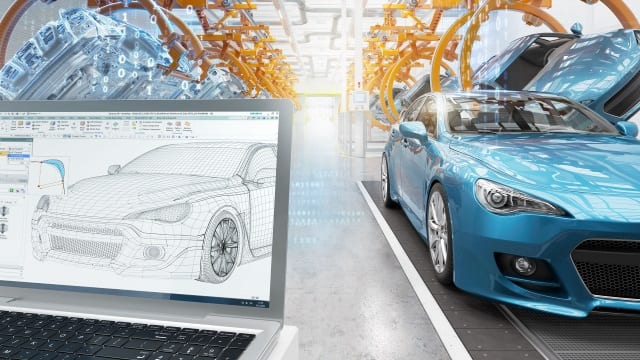
Digital twin and digital twin drive process improvement within and beyond a factory

Digital transformation is a broad term that means many things to many people. But, at its core, digital transformation is a technology-enabled process that facilitates the capture and analysis of operational data, which is then used to inform process adjustments meant to reduce costs while improving efficiencies and business outcomes. In a manufacturing context, deploying and testing these process adjustments in the complex, physical environment of a factory floor is not feasible in terms of both cost and time. 

Instead, leading enterprises are working with trusted partners to build virtual copies of their assets and processes–digital twins–to study key performance indicators like unplanned downtime, material loss, throughput, changeover time, and the like, in an effort to identify and isolate problems, then determine and deploy fixes. With a digital twin, all of this can be done without costly and time-consuming physical iteration. 

Altran, part of the Capgemini Group, is a global innovation and engineering consulting firm that works with a wide range of global enterprises to help shape digital transformation strategies. According to Altran Group Chief Innovation Officer Walid Negm, “Digital twins allow companies to improve a variety of business processes, whether it’s boosting production efficiency of a factory or optimizing the performance of products in the field. Digital twins also begin to position companies for the next dimension of computing that is spatial, interactive and intelligent.”

Pulling the lens back further, and moving beyond the four walls of the factory, digital twins are part of a larger digital continuum–a digital thread–that binds these data sources together creating a virtuous cycle. The efficiency gains and performance improvements of a specific production asset can be expanded to encompass an entire production line, an entire factory, distributed manufacturing facilities, and the logistical machinations that bring raw materials in and push finished products out. Data associated with product usage can be fed back into that virtuous cycle to help designers make both short- and long-term strategic decisions that create value for both buyers and sellers at a global scale. 

However, among the companies that sell digital twin technologies, as well as their clients looking to invest in digital transformation, there’s something of a disconnect between creating a virtual representation of the current state of things as opposed to an aspirational future state.

Factories are inherently complicated and in a constant state of flux. A mix of new and legacy equipment connected to a variety of control and connectivity systems equate to a challenging exercise in capturing the right data, aggregating it in a meaningful way, then analyzing it with an eye on aligning digital transformation investments with desired business outcomes. However, that bit is imminently solvable and sets the stage for the introduction of digital twins. 

When embarking on this journey, it’s important to remember: “Digital twins should twin what you are already doing,” according to Steve Brown, a principal consultant and enterprise architect with Altran. “It should be able to scale to cover everything you are doing. Clients underestimate the sort of breadth of the problem in terms of how you move from a pilot to full scale–how you get commercial value out of your digital twin assets rather than experimenting with application code.” 

In this context, velocity is of the utmost importance. It’s simply not viable to spend years figuring out the data capture and aggregation mechanisms then experimenting in a lab. Manufacturers, and their customers, need to quickly move the needle and create the types of efficiencies and outcomes that are reflected in the top- and bottom-line. 

Describing Altran’s process, Brown explained, “What we do is we work with your data as it already is. We don’t make our clients transform that data into something else. We don’t want them to spend two or three years harmonizing the data formats to fit into a data model. If you do that, you’re not creating a digital twin. You’re creating something brand new–what you’re going to become. A digital twin should be what you already are.” 

In order to create this baseline digital twin, and have it reflect the dynamacy of the environment it mirrors, there are four pillars that must be kept top of mind: 

  • Connectivity and networks allow the transfer of sensor data into the models used to build a digital twin
  • Data intelligence encompasses the systems that translate raw data into data insight, and also includes a workforce DevOps alignment necessary to execute on data insights
  • Simulation, where artificial intelligence, machine learning and other scientific skills are applied, builds this virtual view of operations
  • And a human/machine interface, whether AR/VR or mobile devices, allows workers of varying skill to get the vantage point on a machine or system that’s meaningful to their specific function. 
You Might Also Like
  • Physical AI is exposing a data sovereignty gap (Reader Forum)
  • Japan’s private 5G market is finally moving beyond demo experiments (Analyst Angle)
  • Monday (telco diary) | Sovereign AI for Industry 4.0
  • When the push becomes the pull – private 5G and physical AI
  • Fast-growing private 5G offers blueprint for AI-era telecoms
  • Monday (telco diary) | Consolidation, orchestration, automation
Share 0 LinkedinEmail
Sean Kinney
Sean Kinney, Principal Analyst

Sean focuses on multiple subject areas including 5G, 6G, Open RAN, hybrid cloud, edge computing, and Industry 4.0. Prior to his work at RCR, Sean studied journalism and literature at the University of Mississippi then spent six years based in Key West, Florida, working as a reporter for the Miami Herald Media Company. He currently lives in Fayetteville, Arkansas.

previous post
Miss the boat on IoT, miss the boat on business – warns Voda poll of IoT adopters
next post
Moving to standalone 5G enables new slices, new services, new revenues

White Papers

  • Norton eBook: The 2026 Telco Playbook

  • Enea White Paper: Why Intelligent AAA is the Swiss Army Knife of Telecom

  • CSG White Paper: Telco AI Enabler: Mediation’s Defining Role

  • Enea White Paper: Scalable Database Design for 5G and Beyond

  • Supermicro and NVIDIA Whitepaper: Powering sovereign AI at scale

Editorial Reports

  • Report: Building 6G — Aligning technology, policy and purpose

  • Report: Rethinking the RAN

  • Report: Building AI-Era Network Fabrics

Webinars

  • Appledore Webinar: Closing the Agent-Ready Data Gap for Autonomous Networks

  • Mimosa Webinar – Build the Right Network

  • Webinar: Building 6G — aligning technology, policy and purpose

  • SIMCom Webinar: Scaling your next deployment – from plastic to provisioning

  • Webinar: Rethinking the RAN as AI, cloud and openness converge

Since 1982, RCR Wireless News has been providing wireless and mobile industry news, insights, and analysis to mobile and wireless industry professionals, decision makers, policy makers, analysts and investors.

Facebook Twitter Youtube Linkedin Envelope Rss

Useful Links

  • Subscribe
  • About RCR Wireless News
  • Contact Us
  • Advertise
  • Editorial Calendar
  • Archive
  • RSS
  • Wireless News Archive
  • Subscribe
  • About RCR Wireless News
  • Contact Us
  • Advertise
  • Editorial Calendar
  • Archive
  • RSS
  • Wireless News Archive

Edtior's Picks

Metro fiber, “kick-ass” 5G, a little DCI and D2D – AT&T sets its...
Nokia hints at new campus-AI strategy, raises questions about its old campus-5G one
American Tower sees AI, 5G, and spectrum driving infra demand

Latest Articles

Metro fiber, “kick-ass” 5G, a little DCI and D2D – AT&T sets its course
Nokia hints at new campus-AI strategy, raises questions about its old campus-5G one
American Tower sees AI, 5G, and spectrum driving infra demand
High bandwidth, high fidelity: Vertex 6.0 delivers emulation for ISAC, 6G and more

© 2026 RCR Wireless News All Right Reserved. Developed by Eight Hats.

Cookie Policy | Privacy Policy

RCR Wireless
  • News
  • Channels
    • 5G
    • 6G
    • BSS OSS
    • Carriers
    • IoT
    • Network Infrastructure
    • Open RAN
    • Private 5G
    • Telco AI
    • Telco Cloud
    • Test & Measurement
  • Resources
    • Reports
    • Webinars
    • White papers
    • AI Fundamentals
    • Analyst Angle
    • Editorial Calendar
    • Fundamentals
      • 5G NR Release 17
      • AI
        • Telco AI in 2025
    • Podcasts
      • Let’s Get Digital with Carrie Charles
      • Wireless Connectivity to Enable Industry 4.0 for the Middleprise
      • Well Technically…
      • Will 5G Change the World
      • Accelerating Industry 4.0 Digitalization
  • AI Infrastructure
  • Programs
  • Events
  • RCRtv
  • Advertise
  • Subscribe
RCR Wireless
  • News
  • Channels
    • 5G
    • 6G
    • BSS OSS
    • Carriers
    • IoT
    • Network Infrastructure
    • Open RAN
    • Private 5G
    • Telco AI
    • Telco Cloud
    • Test & Measurement
  • Resources
    • Reports
    • Webinars
    • White papers
    • AI Fundamentals
    • Analyst Angle
    • Editorial Calendar
    • Fundamentals
      • 5G NR Release 17
      • AI
        • Telco AI in 2025
    • Podcasts
      • Let’s Get Digital with Carrie Charles
      • Wireless Connectivity to Enable Industry 4.0 for the Middleprise
      • Well Technically…
      • Will 5G Change the World
      • Accelerating Industry 4.0 Digitalization
  • AI Infrastructure
  • Programs
  • Events
  • RCRtv
  • Advertise
  • Subscribe
@2020 - All Right Reserved. Designed and Developed by PenciDesign
