
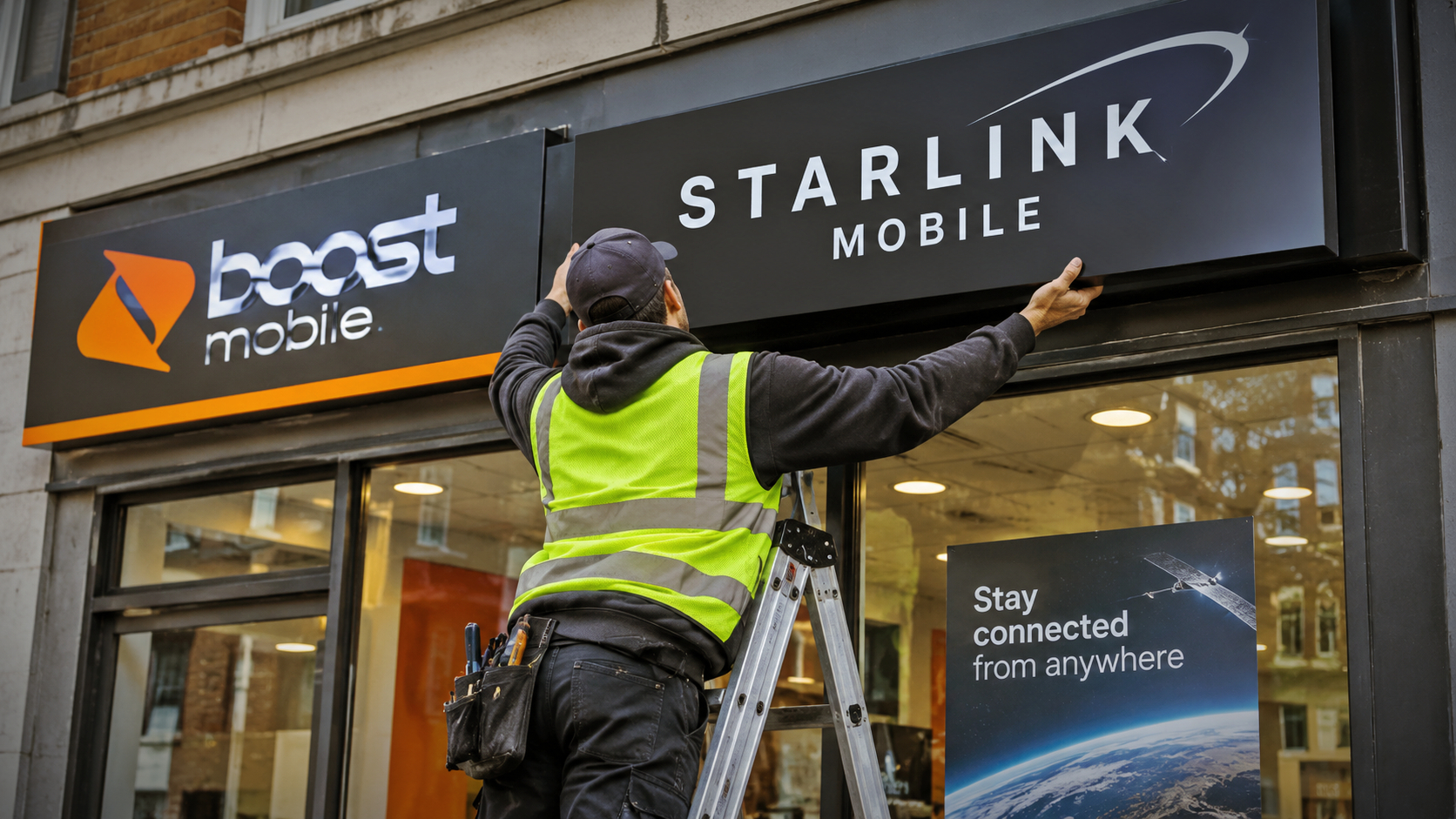
From the newsletter (November 2; sign-up or follow if you want it sooner): SpaceX is reportedly in talks to buy Boost Mobile from EchoStar, potentially securing an MVNO route into US wireless. Analysts question the strategy, warning of regulatory hurdles and limited prospects for wholesale access.
Snap take. A report in The Washington Post, picked up everywhere, says SpaceX is in talks to buy Boost Mobile from EchoStar (the WSJ link is behind a paywall), or else to use its network as a way to gain “backdoor access” to one of the ‘big three’ networks in the US. This write-up, in RCR, is cribbed from an equity research note about the matter from BNP Paribas, which concludes: “In the current ‘glass half-empty’ sentiment on wireless we expect this story to be taken negatively, even if it may hint at the fundamental challenges facing SpaceX in actually standing up a fourth network.” It writes: “The news also just reaffirms our view that SpaceX has not had a consistent strategy for wireless – aside from trying to scare a wireless carrier into giving it an MVNO – as it would have obviously just been better off buying EchoStar at the outset if this was really its goal.”
Sam McHugh, senior analyst at the firm, says: “Our understanding is EchoStar either can’t white-label the MVNO or there are change of control clauses in the deal with AT&T. (The T-Mobile deal is already winding down). This means there’s no back door to an MVNO this way. Now, SpaceX could try to buy Boost, and then, if AT&T threatens to cancel the deal, use that to bolster an argument that telcos are acting anti-competitivelly… It seems unlikely SpaceX will have much joy going down the legal route to try to get an MVNO / wholesale access… This news is unsurprising given we continue to get reports of all the things that SpaceX could be doing… The thrust [represents] a slight shift from news a few weeks ago, when SpaceX was reported to be in talks with tower companies. This seems to suggest an MVNO is still its preferred route. Of course, the two are not mutually exclusive. The fact an MVNO deal would ease its path to building a fourth network in a more economical way is one of the core reasons [it] is such a bad idea for the big three carriers.”