
RCR Wireless
  • News
  • Channels
    • 5G
    • 6G
    • BSS OSS
    • Carriers
    • IoT
    • Network Infrastructure
    • Open RAN
    • Private 5G
    • Telco AI
    • Telco Cloud
    • Test & Measurement
  • Resources
    • Reports
    • Webinars
    • White papers
    • AI Fundamentals
    • Analyst Angle
    • Editorial Calendar
    • Fundamentals
      • 5G NR Release 17
      • AI
        • Telco AI in 2025
    • Podcasts
      • Let’s Get Digital with Carrie Charles
      • Wireless Connectivity to Enable Industry 4.0 for the Middleprise
      • Well Technically…
      • Will 5G Change the World
      • Accelerating Industry 4.0 Digitalization
  • AI Infrastructure
  • Programs
  • Events
  • RCRtv
  • Advertise
  • Subscribe
Monday, August 24, 2026
RCR Wireless
  • News
  • Channels
    • 5G
    • 6G
    • BSS OSS
    • Carriers
    • IoT
    • Network Infrastructure
    • Open RAN
    • Private 5G
    • Telco AI
    • Telco Cloud
    • Test & Measurement
  • Resources
    • Reports
    • Webinars
    • White papers
    • AI Fundamentals
    • Analyst Angle
    • Editorial Calendar
    • Fundamentals
      • 5G NR Release 17
      • AI
        • Telco AI in 2025
    • Podcasts
      • Let’s Get Digital with Carrie Charles
      • Wireless Connectivity to Enable Industry 4.0 for the Middleprise
      • Well Technically…
      • Will 5G Change the World
      • Accelerating Industry 4.0 Digitalization
  • AI Infrastructure
  • Programs
  • Events
  • RCRtv
  • Advertise
  • Subscribe
Add RCR Wireless as a preferred source on Google
  • Qualcomm 6G Insights
  • Huawei Content Hub
  • Qualcomm – 6G Vision
  • OSS/BSS Channel
  • RCRTech Roundtable: AI Infrastructure
RCR Wireless
RCR Wireless
  • Advanced Mimo
  • Mobile mmWave
  • 5G Positioning
  • Green Networks
  • Metaverse
  • Automotive
  • Industrial and Wide-area IoT
Copyright 2021 - All Right Reserved
Home - Reader Forum: Wearable tech is here – are you ready?
OpinionReader ForumUncategorized

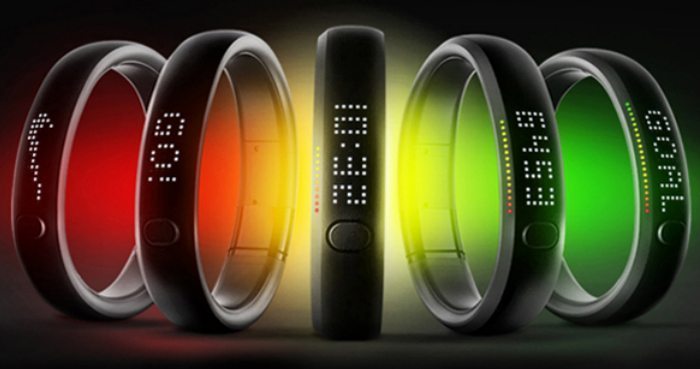
Reader Forum: Wearable tech is here – are you ready?

by Martha DeGrasse April 13, 2014
written by Martha DeGrasse April 13, 2014 Share
LinkedinEmail
Share 0LinkedinEmail
wearables
152

Editor’s Note: Welcome to our weekly Reader Forum section. In an attempt to broaden our interaction with our readers we have created this forum for those with something meaningful to say to the wireless industry. We want to keep this as open as possible, but we maintain some editorial control to keep it free of commercials or attacks. Please send along submissions for this section to our editors at: [email protected].

The other week I was skiing at Vail with three of my best mates, and we were using smart badges from the resort to track our runs. We’re all very competitive people, and we were all trying to go faster, longer, higher and catch more lifts. One of my friends put his work badge in the same pocket as his Vail Resorts badge, which interfered with the scan process. As a result, the system didn’t catch a couple of the lifts he took and he got really upset. “I did more than you did and this thing didn’t work for me,” he said.

What does this have to do with corporate IT management? Everything. As businesses take the lead in delivering compelling new services with wearable technology, they have to step up their game to be sure wearable tech meets consumer expectations. Remember that in my friend’s case, all the lifts were working perfectly, he was having good runs, and all the traditional things were in place that would go into a good day skiing. Yet he was incensed that his smart card missed that particular run because he put the badge in the wrong pocket.

With wearable technology, you’re enhancing the customer experience. But you’re also adding another layer of things that can go wrong and end up annoying that customer. Wearable is beginning to transition from an interesting, convenient new tech to something that businesses and consumers rely on. Think about how we use mobile phones. Over the last 10 to 15 years they’ve delivered huge breakthroughs in convenience and capabilities. Many of us remember being amazed the first time we got a call from someone shopping in the grocery store, asking what brand of toothpaste we wanted. But now, we’re quick to complain, and change providers, if we experience dropped calls or poor reception.

What was once gee-whiz amazing is now something we just take for granted. The same will happen as wearable technology becomes more successful. We in IT need to understand what level of service customers expect and deliver it. Is it okay if service drops every once in a while, or are people expecting it to be 99.99% available?

Interoperability, such as the way another RF (radio frequency) device interrupted with my friend’s ski pass is one issue. So is provisioning. How many developers of cool Google Glass applications are even thinking about how to provision and deprovision such devices, such as when a Glasshole uses his own glasses to access corporate info and then leaves the company?

Security is perhaps the biggest challenge. That’s true, of course, for an individual whose medical information is on a wearable device and wants only their doctor to access it. But think of a worker at a contract manufacturer whose wristband contains production and parts information. A hacker who stole that information during the worker’s train ride home could blow the secret launch of the next iPhone, give competitors a nice head start competing with it, and really hurt that manufacturer’s relationship with Apple.

Another big target for hackers will be the massive amounts of aggregate data about business operations and customer trends generated by wearable technology. As the price and size of components drop and their capabilities increase, wearable devices will become more complex, especially if we preprocess more data on the device to minimize what’s sent over the network. Because they’re more complex, these devices will be harder to secure, but they’ll be low-cost enough they can be deployed in huge volumes.

If a hacker can set up an unobtrusive “tap” and scan individual users in the middle of a plant cafeteria, hospital lobby, or a resort, they could gather aggregate information on a user-by-user basis without having to penetrate a corporate database. This aggregated information about individual purchases, production orders, or customer location can yield valuable clues to everything from a business’ pricing strategy to its raw material costs, profit margins, and employee turnover.

In each of these areas, from performance to interoperability to security, IT needs to proactively work with the businesses pioneering wearable technology to understand what devices they’ll deploy and how they’ll use them. That’s the only way for IT to get up to speed on the required technology, as well as to understand what technologies are mission critical, what levels of failures are acceptable, and do the risk and portfolio analysis to understand where to focus its security and management efforts.

If IT waits for wearable technology to emerge from “rogue IT” to “mainstream” use it will lack the needed skills to properly manage it. That means it will either prevent the business from innovating or see the vital work of managing wearable technology go to an outsourcer. Neither option is a good route or IT leaders who want to stay relevant to their organizations.


You Might Also Like
  • Thursday (telco diary) | Ghosts in the machine – Wanted: more humans to build AI
  • Wednesday (telco diary) | Smells like team spirit – and that tech-bro Musk
  • Tuesday (telco diary) | About open RAN, c/o Dell’Oro…
  • Europe’s AI ambitions will fail without sovereign cloud infrastructure (Reader Forum)
  • Monday (telco diary) | Digging in, moving up – lessons from Lumen
  • Friday (telco diary) | Friday night fare – private 5G to go
Share 0 LinkedinEmail
Martha DeGrasse

Martha DeGrasse is the publisher of Network Builder Reports (nbreports.com). At RCR, Martha authored more than 20 in-depth feature reports and more than 2,400 news articles. She also created the Mobile Minute and the 5 Things to Know Today series. Prior to joining RCR Wireless News, Martha produced business and technology news for CNN and Dow Jones in New York and managed the online editorial group at Hoover’s Online before taking a number of years off to be at home when her children were young. Martha is the board president of Austin's Trinity Center and is a member of the Women's Wireless Leadership Forum.

previous post
Telecom specialist gives insight into spectrum auction
next post
Devices: Amazon Fire TV, Samsung worldwide releases, Bluetooth tracking tag

White Papers

  • Norton eBook: The 2026 Telco Playbook

  • Enea White Paper: Why Intelligent AAA is the Swiss Army Knife of Telecom

  • CSG White Paper: Telco AI Enabler: Mediation’s Defining Role

  • Enea White Paper: Scalable Database Design for 5G and Beyond

  • Supermicro and NVIDIA Whitepaper: Powering sovereign AI at scale

Editorial Reports

  • Report: Building AI-Era Network Fabrics

  • Quantum Safe Networks Market Pulse Report

  • Report: NTN in motion — evolving standards, expanding services

Webinars

  • Mimosa Webinar – Build the Right Network

  • Webinar: Building 6G — aligning technology, policy and purpose

  • SIMCom Webinar: Scaling your next deployment – from plastic to provisioning

  • Webinar: Rethinking the RAN as AI, cloud and openness converge

  • Webinar: Scale-Up, Scale-Out, Scale-Across – Building AI-Era Network Fabrics

Since 1982, RCR Wireless News has been providing wireless and mobile industry news, insights, and analysis to mobile and wireless industry professionals, decision makers, policy makers, analysts and investors.

Facebook Twitter Youtube Linkedin Envelope Rss

Useful Links

  • Subscribe
  • About RCR Wireless News
  • Contact Us
  • Advertise
  • Editorial Calendar
  • Archive
  • RSS
  • Wireless News Archive
  • Subscribe
  • About RCR Wireless News
  • Contact Us
  • Advertise
  • Editorial Calendar
  • Archive
  • RSS
  • Wireless News Archive

Edtior's Picks

Mimosa Webinar – Build the Right Network
ZTE’s computing business drives H1 growth as carrier spending weakens
Planning for next: Black swans during an AI frenzy

Latest Articles

Mimosa Webinar – Build the Right Network
ZTE’s computing business drives H1 growth as carrier spending weakens
Planning for next: Black swans during an AI frenzy
AI infrastructure drives Keysight test demand

© 2026 RCR Wireless News All Right Reserved. Developed by Eight Hats.

Cookie Policy | Privacy Policy

RCR Wireless
  • News
  • Channels
    • 5G
    • 6G
    • BSS OSS
    • Carriers
    • IoT
    • Network Infrastructure
    • Open RAN
    • Private 5G
    • Telco AI
    • Telco Cloud
    • Test & Measurement
  • Resources
    • Reports
    • Webinars
    • White papers
    • AI Fundamentals
    • Analyst Angle
    • Editorial Calendar
    • Fundamentals
      • 5G NR Release 17
      • AI
        • Telco AI in 2025
    • Podcasts
      • Let’s Get Digital with Carrie Charles
      • Wireless Connectivity to Enable Industry 4.0 for the Middleprise
      • Well Technically…
      • Will 5G Change the World
      • Accelerating Industry 4.0 Digitalization
  • AI Infrastructure
  • Programs
  • Events
  • RCRtv
  • Advertise
  • Subscribe
RCR Wireless
  • News
  • Channels
    • 5G
    • 6G
    • BSS OSS
    • Carriers
    • IoT
    • Network Infrastructure
    • Open RAN
    • Private 5G
    • Telco AI
    • Telco Cloud
    • Test & Measurement
  • Resources
    • Reports
    • Webinars
    • White papers
    • AI Fundamentals
    • Analyst Angle
    • Editorial Calendar
    • Fundamentals
      • 5G NR Release 17
      • AI
        • Telco AI in 2025
    • Podcasts
      • Let’s Get Digital with Carrie Charles
      • Wireless Connectivity to Enable Industry 4.0 for the Middleprise
      • Well Technically…
      • Will 5G Change the World
      • Accelerating Industry 4.0 Digitalization
  • AI Infrastructure
  • Programs
  • Events
  • RCRtv
  • Advertise
  • Subscribe
@2020 - All Right Reserved. Designed and Developed by PenciDesign
