
RCR Wireless
  • News
  • Channels
    • 5G
    • 6G
    • BSS OSS
    • Carriers
    • IoT
    • Network Infrastructure
    • Open RAN
    • Private 5G
    • Telco AI
    • Telco Cloud
    • Test & Measurement
  • Resources
    • Reports
    • Webinars
    • White papers
    • AI Fundamentals
    • Analyst Angle
    • Editorial Calendar
    • Fundamentals
      • 5G NR Release 17
      • AI
        • Telco AI in 2025
    • Podcasts
      • Let’s Get Digital with Carrie Charles
      • Wireless Connectivity to Enable Industry 4.0 for the Middleprise
      • Well Technically…
      • Will 5G Change the World
      • Accelerating Industry 4.0 Digitalization
  • AI Infrastructure
  • Programs
  • Events
  • RCRtv
  • Advertise
  • Subscribe
Saturday, September 19, 2026
RCR Wireless
  • News
  • Channels
    • 5G
    • 6G
    • BSS OSS
    • Carriers
    • IoT
    • Network Infrastructure
    • Open RAN
    • Private 5G
    • Telco AI
    • Telco Cloud
    • Test & Measurement
  • Resources
    • Reports
    • Webinars
    • White papers
    • AI Fundamentals
    • Analyst Angle
    • Editorial Calendar
    • Fundamentals
      • 5G NR Release 17
      • AI
        • Telco AI in 2025
    • Podcasts
      • Let’s Get Digital with Carrie Charles
      • Wireless Connectivity to Enable Industry 4.0 for the Middleprise
      • Well Technically…
      • Will 5G Change the World
      • Accelerating Industry 4.0 Digitalization
  • AI Infrastructure
  • Programs
  • Events
  • RCRtv
  • Advertise
  • Subscribe
Add RCR Wireless as a preferred source on Google
  • Qualcomm 6G Insights
  • Huawei Content Hub
  • Qualcomm – 6G Vision
  • OSS/BSS Channel
  • RCRTech Roundtable: AI Infrastructure
RCR Wireless
RCR Wireless
  • Advanced Mimo
  • Mobile mmWave
  • 5G Positioning
  • Green Networks
  • Metaverse
  • Automotive
  • Industrial and Wide-area IoT
Copyright 2021 - All Right Reserved
Home - FTC seeks injunction against Qualcomm
Chips - Semiconductor

FTC seeks injunction against Qualcomm

by Martha DeGrasse January 18, 2017
written by Martha DeGrasse January 18, 2017 Share
LinkedinEmail
Share 0LinkedinEmail
FTC
90

Regulators claim “no license, no chips” policy hurts competitors.

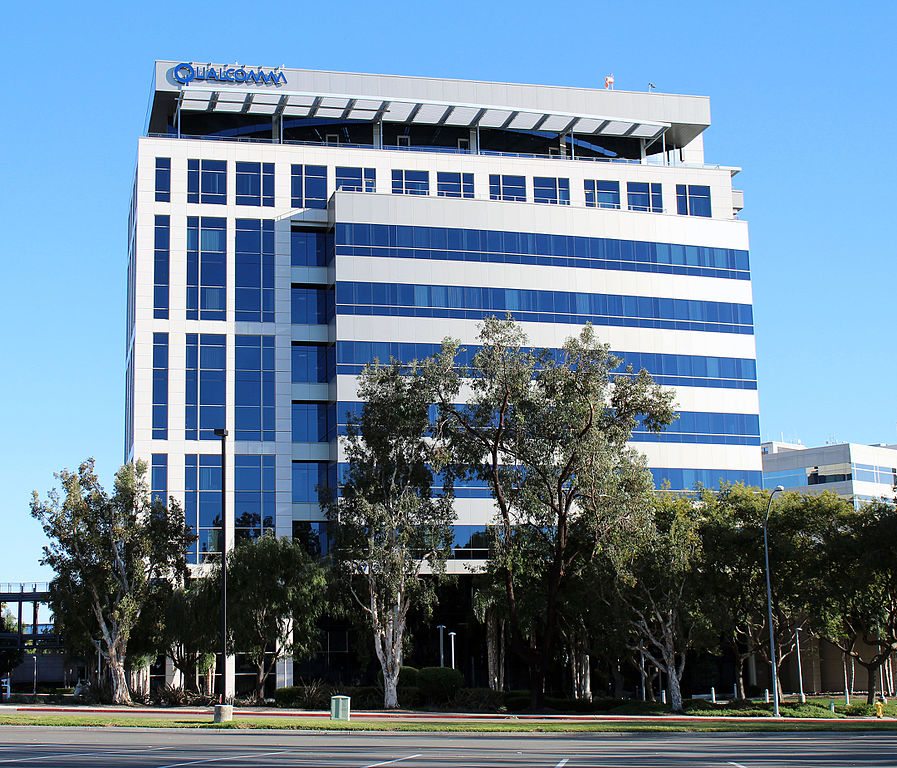
Intel’s efforts to crack the market for baseband processors could get a boost from the U.S. government. This week the Federal Trade Commission filed a lawsuit in San Jose, California, seeking a permanent injunction against market leader Qualcomm “to undo and prevent its unfair methods of competition.”

Qualcomm has almost two-thirds of the global market for LTE baseband processors, the chips which control a mobile device’s modem. The FTC is not challenging Qualcomm’s market position, but regulators are worried that since so many mobile phone makers use Qualcomm’s chips, the company has an unfair advantage in the other part of its business: patent licensing.

Licensing patented technology is the most profitable part of Qualcomm’s business, and some of its technologies are “standards essential,” meaning mobile devices cannot meet industry standards without them. Qualcomm is required by law to license its patents at “fair and reasonable terms,” but that is obviously open to interpretation and in the end the terms are those that both companies accept. The FTC claims companies are accepting unusually high license fees because Qualcomm threatens to disrupt their supply of baseband processors if they don’t capitulate.

“Qualcomm maintains a ‘no license, no chips’ policy under which it will supply its baseband processors only on the condition that cellphone manufacturers agree to Qualcomm’s preferred license terms,” the FTC said in a press release. “The risk of losing access to Qualcomm baseband processors is too great for a cellphone manufacturer to bear because it would preclude the manufacturer from selling phones for use on important cellular networks.”

Qualcomm’s response
“Qualcomm has never withheld or threatened to withhold chip supply in order to obtain agreement to unfair or unreasonable licensing terms,” the company said in a statement. “The FTC’s allegation to the contrary – the central thesis of the complaint – is wrong.”

Qualcomm said the FTC complaint was based on “a flawed legal theory, a lack of economic support and significant misconceptions about the mobile technology industry.” The company also said Congress asked the FTC to refrain from this so-called “midnight litigation.”

“The FTC accelerated the investigation of Qualcomm and directed the filing of the complaint just days before the change of the administration though only three of five FTC commissioners are in place,” the company said.

The FTC specifically calls out Qualcomm for elbowing potential competitors out of the market. The complaint does not name names, but in the past Qualcomm has been accused of restricting access to its standards essential patents when dealing with rival modem makers including Intel, Samsung and MediaTek.

Last month, South Korean regulators brought similar charges against Qualcomm and slapped the company with an $850 million fine. Qualcomm plans to challenge the ruling in court.

Private deal with Apple?
The FTC complaint also says Qualcomm cut a deal with Apple, offering reduced patent royalties in exchange for Apple’s commitment to use only Qualcomm’s baseband processors. IPhones have used Qualcomm modems until last year, when the iPhone 7 models designed for the AT&T Mobility and T-Mobile US networks shipped with Intel modems.

“Qualcomm precluded Apple from sourcing baseband processors from Qualcomm’s competitors from 2011 to 2016,” said the FTC. “Qualcomm recognized that any competitor that won Apple’s business would become stronger, and used exclusivity to prevent Apple from working with and improving the effectiveness of Qualcomm’s competitors.”

Analyst Linley Gwennap of The Linley Group believes Apple is frustrated with Qualcomm and thinks the company is likely to have joined forces with Intel in pushing the FTC to seek this injunction.

“It appears to be driven by Intel (4% market share) and Apple in an attempt to gain leverage over Qualcomm through the courts rather than in the marketplace,” Gwennap said. He said that Qualcomm engages in “vigourous competition” with Samsung, Huawei, MediaTek and Spreadtrum, and that the company’s share of the baseband processor market has been under pressure for two years.

Legal challenges to Qualcomm’s dominant market position may take months or even years to make their way through the courts. Intel, Samsung and Qualcomm’s other competitors may continue to trail the San Diego, California-based company in the market for LTE modems, but the market for “5G” modems could be a different story. Qualcomm and Intel have already announced 5G modems. Qualcomm’s modem supports the frequency bands in which U.S. carriers are testing 5G, while Intel’s supports those bands as well as the bands used by Chinese carriers.

Qualcomm shares, which were up more than 30% last year, slipped about 5% Tuesday on news of the FTC complaint, but started climbing again on Wednesday.

Follow me on Twitter.

You Might Also Like
  • Softbank targets sovereign AI demand in Japan
  • SpaceX brings Xsight Labs onboard ahead of Starlink v3 launch
  • The hidden pattern in Nvidia’s billion-dollar deals (Analyst Angle)
  • Marvell expands AI interconnect portfolio with $540m XConn deal
  • The compute industrial complex (Analyst Angle)
  • Research note: Intel on 18A process and progress
Share 0 LinkedinEmail
Martha DeGrasse

Martha DeGrasse is the publisher of Network Builder Reports (nbreports.com). At RCR, Martha authored more than 20 in-depth feature reports and more than 2,400 news articles. She also created the Mobile Minute and the 5 Things to Know Today series. Prior to joining RCR Wireless News, Martha produced business and technology news for CNN and Dow Jones in New York and managed the online editorial group at Hoover’s Online before taking a number of years off to be at home when her children were young. Martha is the board president of Austin's Trinity Center and is a member of the Women's Wireless Leadership Forum.

previous post
How will 5G impact the Internet of Things?
next post
Telia Carrier deploys fiber optic cable linking Sweden with Russia

White Papers

  • Norton eBook: The 2026 Telco Playbook

  • Enea White Paper: Why Intelligent AAA is the Swiss Army Knife of Telecom

  • CSG White Paper: Telco AI Enabler: Mediation’s Defining Role

  • Enea White Paper: Scalable Database Design for 5G and Beyond

  • Supermicro and NVIDIA Whitepaper: Powering sovereign AI at scale

Editorial Reports

  • Report: Building 6G — Aligning technology, policy and purpose

  • Report: Rethinking the RAN

  • Report: Building AI-Era Network Fabrics

Webinars

  • Appledore Webinar: Closing the Agent-Ready Data Gap for Autonomous Networks

  • Mimosa Webinar – Build the Right Network

  • Webinar: Building 6G — aligning technology, policy and purpose

  • SIMCom Webinar: Scaling your next deployment – from plastic to provisioning

  • Webinar: Rethinking the RAN as AI, cloud and openness converge

Since 1982, RCR Wireless News has been providing wireless and mobile industry news, insights, and analysis to mobile and wireless industry professionals, decision makers, policy makers, analysts and investors.

Facebook Twitter Youtube Linkedin Envelope Rss

Useful Links

  • Subscribe
  • About RCR Wireless News
  • Contact Us
  • Advertise
  • Editorial Calendar
  • Archive
  • RSS
  • Wireless News Archive
  • Subscribe
  • About RCR Wireless News
  • Contact Us
  • Advertise
  • Editorial Calendar
  • Archive
  • RSS
  • Wireless News Archive

Edtior's Picks

Zayo locks in fiber supply as AI infrastructure demand intensifies
IRIS² takes shape as Europe puts €15.6bn satellite plan into orbit
The 4GHz AI case has a way to go (Telco Diary)

Latest Articles

Zayo locks in fiber supply as AI infrastructure demand intensifies
IRIS² takes shape as Europe puts €15.6bn satellite plan into orbit
The 4GHz AI case has a way to go (Telco Diary)
Crown Castle sees spectrum, AI supporting tower growth

© 2026 RCR Wireless News All Right Reserved. Developed by Eight Hats.

Cookie Policy | Privacy Policy

RCR Wireless
  • News
  • Channels
    • 5G
    • 6G
    • BSS OSS
    • Carriers
    • IoT
    • Network Infrastructure
    • Open RAN
    • Private 5G
    • Telco AI
    • Telco Cloud
    • Test & Measurement
  • Resources
    • Reports
    • Webinars
    • White papers
    • AI Fundamentals
    • Analyst Angle
    • Editorial Calendar
    • Fundamentals
      • 5G NR Release 17
      • AI
        • Telco AI in 2025
    • Podcasts
      • Let’s Get Digital with Carrie Charles
      • Wireless Connectivity to Enable Industry 4.0 for the Middleprise
      • Well Technically…
      • Will 5G Change the World
      • Accelerating Industry 4.0 Digitalization
  • AI Infrastructure
  • Programs
  • Events
  • RCRtv
  • Advertise
  • Subscribe
RCR Wireless
  • News
  • Channels
    • 5G
    • 6G
    • BSS OSS
    • Carriers
    • IoT
    • Network Infrastructure
    • Open RAN
    • Private 5G
    • Telco AI
    • Telco Cloud
    • Test & Measurement
  • Resources
    • Reports
    • Webinars
    • White papers
    • AI Fundamentals
    • Analyst Angle
    • Editorial Calendar
    • Fundamentals
      • 5G NR Release 17
      • AI
        • Telco AI in 2025
    • Podcasts
      • Let’s Get Digital with Carrie Charles
      • Wireless Connectivity to Enable Industry 4.0 for the Middleprise
      • Well Technically…
      • Will 5G Change the World
      • Accelerating Industry 4.0 Digitalization
  • AI Infrastructure
  • Programs
  • Events
  • RCRtv
  • Advertise
  • Subscribe
@2020 - All Right Reserved. Designed and Developed by PenciDesign

