
RCR Wireless
  • News
  • Channels
    • 5G
    • 6G
    • BSS OSS
    • Carriers
    • IoT
    • Network Infrastructure
    • Open RAN
    • Private 5G
    • Telco AI
    • Telco Cloud
    • Test & Measurement
  • Resources
    • Reports
    • Webinars
    • White papers
    • AI Fundamentals
    • Analyst Angle
    • Editorial Calendar
    • Fundamentals
      • 5G NR Release 17
      • AI
        • Telco AI in 2025
    • Podcasts
      • Let’s Get Digital with Carrie Charles
      • Wireless Connectivity to Enable Industry 4.0 for the Middleprise
      • Well Technically…
      • Will 5G Change the World
      • Accelerating Industry 4.0 Digitalization
  • AI Infrastructure
  • Programs
  • Events
  • RCRtv
  • Advertise
  • Subscribe
Saturday, September 12, 2026
RCR Wireless
  • News
  • Channels
    • 5G
    • 6G
    • BSS OSS
    • Carriers
    • IoT
    • Network Infrastructure
    • Open RAN
    • Private 5G
    • Telco AI
    • Telco Cloud
    • Test & Measurement
  • Resources
    • Reports
    • Webinars
    • White papers
    • AI Fundamentals
    • Analyst Angle
    • Editorial Calendar
    • Fundamentals
      • 5G NR Release 17
      • AI
        • Telco AI in 2025
    • Podcasts
      • Let’s Get Digital with Carrie Charles
      • Wireless Connectivity to Enable Industry 4.0 for the Middleprise
      • Well Technically…
      • Will 5G Change the World
      • Accelerating Industry 4.0 Digitalization
  • AI Infrastructure
  • Programs
  • Events
  • RCRtv
  • Advertise
  • Subscribe
Add RCR Wireless as a preferred source on Google
  • Qualcomm 6G Insights
  • Huawei Content Hub
  • Qualcomm – 6G Vision
  • OSS/BSS Channel
  • RCRTech Roundtable: AI Infrastructure
RCR Wireless
RCR Wireless
  • Advanced Mimo
  • Mobile mmWave
  • 5G Positioning
  • Green Networks
  • Metaverse
  • Automotive
  • Industrial and Wide-area IoT
Copyright 2021 - All Right Reserved
Home - How will 5G impact the Internet of Things?
5GInternet of Things (IoT)LTEQualcomm 5G Use Cases and EssentialsSponsored

How will 5G impact the Internet of Things?

by Qualcomm January 18, 2017
written by Qualcomm January 18, 2017 Share
LinkedinEmail
Share 0LinkedinEmail
124

5G will be more than a new generation of mobile.
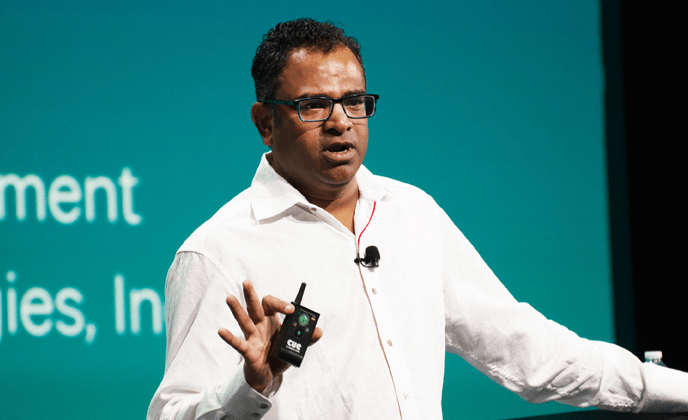
Qualcomm Senior Vice President Raj Talluri explains

It’s a unifying fabric that will connect billions of devices in some of the fastest, most reliable and most efficient ways possible. The impact will be revolutionary, reshaping industries and transforming our world.

This new world requires not only ultra-fast connectivity for smartphones, tablets and laptops, but also bringing online a vast number of smart, efficient, often low-cost, low-complexity devices — and keeping them connected even under very challenging conditions. And while we’ve been talking about the Internet of Things for some time, with 5G, we’ll take it to a whole new level and extend the promise to some revolutionary new uses.

Qualcomm Senior Vice President Raj Talluri, who has an extensive background in 3G and 4G technology, also knows a thing or two about IoT, which is why we sat down with him to discuss how 5G will change everything we know about connected devices.

It seems like the IoT has already arrived. How is 5G going to change it?

I hear this quite a bit, and it’s understandable. Everyone already loves to talk about the IoT because we’re just starting to see its potential, and that’s exciting. But with 5G, we’ll actually help realize the promise of a massively expanded IoT beyond what’s possible with today’s technologies.

We’ll be aware of and able to interact with our surroundings to new levels — even with “things”  thousands of miles away — through very intelligent connected devices and sensors. These sensors will allow us to gather data continuously, to be proactive and, eventually, even allow our devices to act on our behalves. For example, smart home cameras will alert people when a package has been delivered to the front door, or when a stranger standing at the door. Or a baby camera will allow parents to see how well their baby is sleeping, or inform them about the baby’s sleep trends and monitor breathing and other vital signs for peace of mind during the night.

So this will be more than just individual components then? 

Exactly! Much more than smart home devices, actually. I think with 5G, the scope and scale of IoT is going to be so impressive. Imagine a city filled with a swarm of sensors, monitoring everything from traffic to environment and air quality to critical services, and this information can be communicated back to you as you navigate the city’s streets. Or think about sensors in our forests that are able to detect fires early and communicate that data to emergency responders.

Some of the use cases you mentioned — sensors in forests, for example — can be pretty remote? How do you keep these areas connected?

That’s one of our key challenges and one that’s fun to tackle. Simply put, we need to reach the things that seem unreachable today.

The good news is that this capability is being addressed already with LTE cellular technology, which is laying the foundation for 5G. Qualcomm is driving advancements in cellular technology that make it viable to scale down to very low data rates — 10s or 100s of kbps — with narrowband LTE technologies. This gives you connectivity with very low power consumption and reduced bandwidth strain.

LTE IoT devices will use narrow bandwidth (as little as 180 kHz) to support tens of thousands of things per cell, provide deep coverage for challenging locations, and offer more than 10 years of battery life, all in a low-cost package.

So 5G will reach those unreachable devices?

Absolutely. I can imagine so many use cases for this that will have positive impact. Sometimes a device will be so remote, or so deep underground, that traditional uplink communication won’t be an option, even at narrow, low-frequency bandwidths. It might be something as simple as a gas meter in a basement or as complex as mobile mining equipment deep underground.

5G will optimize the downlink transmissions to ensure deep coverage for these devices. For the uplink transmission, 5G can additionally support the use of non-orthogonal multiple access techniques, such as Resource Spread Multiple Access (RSMA), for target use cases such as sporadic uplink traffic from battery-powered IoT sensors. 5G devices will also support multi-hop communication, managed by the network. This will allow messages to be relayed until direct coverage is available, which allows these devices to use far lower power transmissions.

How has Qualcomm been working toward these IoT advancements prior to 5G?

Making 5G a reality requires a deep knowledge of what it takes to drive new mobile technologies from standardization to commercialization and how these devices will interact with other connectivity technologies such as Wi-Fi and Bluetooth. This is exactly the type of expertise that Qualcomm brings to the table. I’m proud to say that we’ve been driving new cellular technologies to commercialization over the last three decades, and we’ve experienced quite a few “industry firsts” along the way. Because of our experience and expertise, we’re well positioned to meet the challenges of 5G head on and lead the world to 5G.


You Might Also Like
  • American Tower sees AI, 5G, and spectrum driving infra demand
  • VodafoneThree intros tiered 5G SA slicing portfolio for consumers, enterprises, critical services
  • ZTE’s computing business drives H1 growth as carrier spending weakens
  • Omdia sees RAN growth outside China despite weak global market
  • Telstra targets AI-driven growth with 5G, digital infrastructure push
  • Rakuten confirms KDDI roaming will be reduced as own network expands
Share 0 LinkedinEmail
Qualcomm

Mobile is already the biggest technology platform in history, and 5G technology has the opportunity to expand it even further by transforming people, societies and industries. Much more than higher peak rates, Qualcomm envisions 5G as a way to enable new services, connect new industries and devices, and empower new user experiences. 5G networks will play a key part in creating the connectivity fabric for everything.

previous post
SK Telecom to invest $4.2 billion in AI, internet of things
next post
FTC seeks injunction against Qualcomm

White Papers

  • Norton eBook: The 2026 Telco Playbook

  • Enea White Paper: Why Intelligent AAA is the Swiss Army Knife of Telecom

  • CSG White Paper: Telco AI Enabler: Mediation’s Defining Role

  • Enea White Paper: Scalable Database Design for 5G and Beyond

  • Supermicro and NVIDIA Whitepaper: Powering sovereign AI at scale

Editorial Reports

  • Report: Building 6G — Aligning technology, policy and purpose

  • Report: Rethinking the RAN

  • Report: Building AI-Era Network Fabrics

Webinars

  • Appledore Webinar: Closing the Agent-Ready Data Gap for Autonomous Networks

  • Mimosa Webinar – Build the Right Network

  • Webinar: Building 6G — aligning technology, policy and purpose

  • SIMCom Webinar: Scaling your next deployment – from plastic to provisioning

  • Webinar: Rethinking the RAN as AI, cloud and openness converge

Since 1982, RCR Wireless News has been providing wireless and mobile industry news, insights, and analysis to mobile and wireless industry professionals, decision makers, policy makers, analysts and investors.

Facebook Twitter Youtube Linkedin Envelope Rss

Useful Links

  • Subscribe
  • About RCR Wireless News
  • Contact Us
  • Advertise
  • Editorial Calendar
  • Archive
  • RSS
  • Wireless News Archive
  • Subscribe
  • About RCR Wireless News
  • Contact Us
  • Advertise
  • Editorial Calendar
  • Archive
  • RSS
  • Wireless News Archive

Edtior's Picks

Metro fiber, “kick-ass” 5G, a little DCI and D2D – AT&T sets its...
Nokia hints at new campus-AI strategy, raises questions about its old campus-5G one
American Tower sees AI, 5G, and spectrum driving infra demand

Latest Articles

Metro fiber, “kick-ass” 5G, a little DCI and D2D – AT&T sets its course
Nokia hints at new campus-AI strategy, raises questions about its old campus-5G one
American Tower sees AI, 5G, and spectrum driving infra demand
High bandwidth, high fidelity: Vertex 6.0 delivers emulation for ISAC, 6G and more

© 2026 RCR Wireless News All Right Reserved. Developed by Eight Hats.

Cookie Policy | Privacy Policy

RCR Wireless
  • News
  • Channels
    • 5G
    • 6G
    • BSS OSS
    • Carriers
    • IoT
    • Network Infrastructure
    • Open RAN
    • Private 5G
    • Telco AI
    • Telco Cloud
    • Test & Measurement
  • Resources
    • Reports
    • Webinars
    • White papers
    • AI Fundamentals
    • Analyst Angle
    • Editorial Calendar
    • Fundamentals
      • 5G NR Release 17
      • AI
        • Telco AI in 2025
    • Podcasts
      • Let’s Get Digital with Carrie Charles
      • Wireless Connectivity to Enable Industry 4.0 for the Middleprise
      • Well Technically…
      • Will 5G Change the World
      • Accelerating Industry 4.0 Digitalization
  • AI Infrastructure
  • Programs
  • Events
  • RCRtv
  • Advertise
  • Subscribe
RCR Wireless
  • News
  • Channels
    • 5G
    • 6G
    • BSS OSS
    • Carriers
    • IoT
    • Network Infrastructure
    • Open RAN
    • Private 5G
    • Telco AI
    • Telco Cloud
    • Test & Measurement
  • Resources
    • Reports
    • Webinars
    • White papers
    • AI Fundamentals
    • Analyst Angle
    • Editorial Calendar
    • Fundamentals
      • 5G NR Release 17
      • AI
        • Telco AI in 2025
    • Podcasts
      • Let’s Get Digital with Carrie Charles
      • Wireless Connectivity to Enable Industry 4.0 for the Middleprise
      • Well Technically…
      • Will 5G Change the World
      • Accelerating Industry 4.0 Digitalization
  • AI Infrastructure
  • Programs
  • Events
  • RCRtv
  • Advertise
  • Subscribe
@2020 - All Right Reserved. Designed and Developed by PenciDesign
