

RCR Wireless
  • News
  • Channels
    • 5G
    • 6G
    • BSS OSS
    • Carriers
    • IoT
    • Network Infrastructure
    • Open RAN
    • Private 5G
    • Telco AI
    • Telco Cloud
    • Test & Measurement
  • Resources
    • Reports
    • Webinars
    • White papers
    • AI Fundamentals
    • Analyst Angle
    • Editorial Calendar
    • Fundamentals
      • 5G NR Release 17
      • AI
        • Telco AI in 2025
    • Podcasts
      • Let’s Get Digital with Carrie Charles
      • Wireless Connectivity to Enable Industry 4.0 for the Middleprise
      • Well Technically…
      • Will 5G Change the World
      • Accelerating Industry 4.0 Digitalization
  • AI Infrastructure
  • Programs
  • Events
  • RCRtv
  • Advertise
  • Subscribe
Friday, September 25, 2026
RCR Wireless
  • News
  • Channels
    • 5G
    • 6G
    • BSS OSS
    • Carriers
    • IoT
    • Network Infrastructure
    • Open RAN
    • Private 5G
    • Telco AI
    • Telco Cloud
    • Test & Measurement
  • Resources
    • Reports
    • Webinars
    • White papers
    • AI Fundamentals
    • Analyst Angle
    • Editorial Calendar
    • Fundamentals
      • 5G NR Release 17
      • AI
        • Telco AI in 2025
    • Podcasts
      • Let’s Get Digital with Carrie Charles
      • Wireless Connectivity to Enable Industry 4.0 for the Middleprise
      • Well Technically…
      • Will 5G Change the World
      • Accelerating Industry 4.0 Digitalization
  • AI Infrastructure
  • Programs
  • Events
  • RCRtv
  • Advertise
  • Subscribe
Add RCR Wireless as a preferred source on Google
  • Qualcomm 6G Insights
  • Huawei Content Hub
  • Qualcomm – 6G Vision
  • OSS/BSS Channel
  • RCRTech Roundtable: AI Infrastructure
RCR Wireless
RCR Wireless
  • Advanced Mimo
  • Mobile mmWave
  • 5G Positioning
  • Green Networks
  • Metaverse
  • Automotive
  • Industrial and Wide-area IoT
Copyright 2021 - All Right Reserved
Home - Fundamentals - The eSIM / eUICC equation – in sum: eSIM = MFF2 + eUICC
FundamentalsIndustry 4.0Internet of Things (IoT)IoT

The eSIM / eUICC equation – in sum: eSIM = MFF2 + eUICC

by James Blackman October 11, 2023
written by James Blackman October 11, 2023 Share
LinkedinEmail
Share 0LinkedinEmail
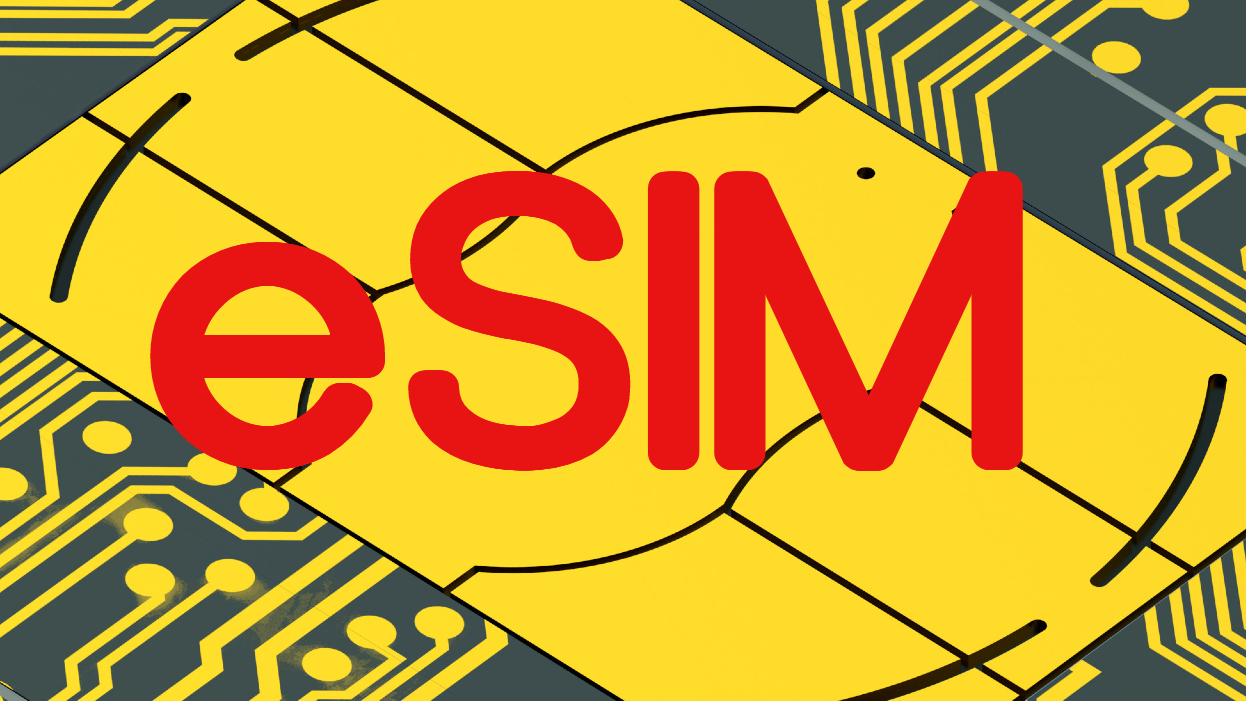
esim Background image: 123rf
Background image: 123rf
422

As a matter of record, commonly missed, it is worth noting that eSIM and eUICC are different technologies. Asked about the application of eSIM (and iSIM) in smart metering, specifically, Neil Bosworth, head of vertical segments and IoT products at Telit Cinterion, wants this memorialised at the start. “The terms are sometimes confused,” he says. And actually, the latter is where most of the dynamism applies, even if it is served up as a proposition in the former. 

To explain, for the record, before considering the case of eSIM in the smart metering sector: embedded SIM (eSIM) technology literally embeds a cellular-based subscriber identity module (SIM) – in a solderable form factor – into a device circuit board, and combines it with remote provisioning software to create a new (eSIM) solution. The humble SIM has evolved and mutated over the years, from a credit-card sized first-gen form factor (1FF) in the early 1990s, through mini-SIMs (2FF) in the mid-1990s, micro-SIMs (3FF) in the early 2000s, and nano-SIMs (4FF) in the 2010s.
ARD036 Smart metering %E2%80%93 how IoT has changed up a gear in the utilities market Editorial Banners

In parallel, a second family of ‘machine’ (M2M/IoT) SIMs has emerged; eSIM uses the second-gen machine-form (MFF2), which, as stated, can be soldered into an IoT device during its production (or assembly). This MFF2 SIM is the first component in an eSIM solution, then. As above, the other component, based in software, and installed on the SIM, enables dynamic control of the SIM’s carrier functions, plus some security aspects. This component is the universal integrated circuit card (UICC), embedded in the SIM into the device as the eUICC.

A traditional UICC contains a single mobile network operator (MNO) profile, which includes the information the MNO needs to enable connectivity; an eUICC can host multiple profiles, and so does not need to be changed, as part of a full SIM swap, in order to change operators. The eUICC also has space for additional applications, notably security features. In sum, the equation looks like this: eSIM = MFF2 + eUICC; where the left side is the whole solution, and the right side is its complementary parts.

The eSIM has significant benefits for the entire cellular market, including the traditional business of smartphones and tablets; but it is a particular boon for “high-volume industrial electronics… with stringent cost constraints”, notes Bosworth. This includes smart metering, of course, as one of the very biggest and best established disciplines in IoT, dating back to the formative M2M days; but it applies across all of the IoT sector. 
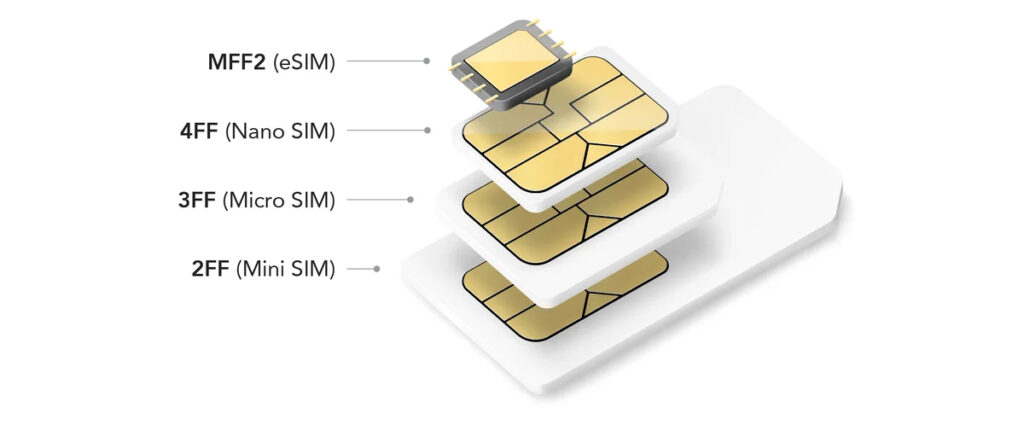
Image: Emnify
Image: Emnify

Germany-based IoT SIM provider Emnify writes: “For M2M deployments where devices are distributed globally and in remote locations, coordinating the correct installation of the SIM at the correct time can pose logistical nightmares. Installing a SIM with an eUICC during the manufacturing stage also saves costs on production and distribution as well as inventory as you only require a single SKU.”

UK IoT solution provider Velos, the source of the above-mentioned MFF2 + eUICC equation, writes separately: “Over the-air (OTA) provisioning and management offers a level of flexibility that was simply not possible before eUICC was invented. User devices with an eSIM service can also be migrated in their hundreds in a matter of moments, and we are still only in the early stages of the technology’s lifecycle.”

Telit Cinterion has its own blog(s) on the matter, and makes a point to introduce a third (fourth?) crucial SIM-based feature for large-scale IoT deployments, and specifically for tracking-style logistics solutions that are liable to roam in global markets: the capacity to carry multiple MNO identities, or international mobile subscriber identity (IMSI) numbers. Telit Cinterion, like other firms with global virtual IoT network operator (MVNO) relationships, is offering eSIM with a multi-IMSI capability. 

It explains: “In roaming scenarios, the home network is also identified by the IMSI. In practice, a multi-IMSI SIM carries multiple MNO identities and can use the roaming agreements of each identity. It can also be made to switch to a different MNO. This functionality enables the connectivity provider to offer its service based on the MNO with the most suitable coverage, network technology, and cost – according to a specific use case.  

“The multi-IMSI SIM’s flexibility allows connectivity providers to support the long-term deployment of diverse use cases in an ever-changing landscape. Multi-IMSI service is typically available only through IoT MVNOs. It provides a more advanced and comprehensive solution for IoT deployments. Choosing an MVNO can usually yield better service at lower costs and better support for mission-critical services.”

In conversation about smart metering, Bosworth at Telit Cinterion notes as well that not all eSIM designs are equal. He says: “While there is a proliferation of tenders for eSIM in smart metering, not all designs harness the full potential of dynamic provisioning, which stands as the primary use case for eSIM.” He also points to the limitations of eSIM technology in certain IoT use cases, such as gas and water metering – which rely on battery power (rather than mains power, as with electric metering, typically), and therefore seek to jettison extraneous complexity and comms.  

He comments: “OTA provisioning may impact battery performance, necessitating careful management. Additionally, in cellular deployments, the frequency bands utilised by MNOs can vary, thereby affecting penetration through walls, potentially leading to unexpected behaviour during the active lifetime of a meter.” This is discussed in a separate piece, about the impact on smart metering, where Bosworth addresses a “myriad of new opportunities” from eSIM (and iSIM) technologies. That article is available here (pending).

For more on this subject, in the context of smart metering, and to hear more from Telit Cinterion, join RCR’s smart-metering webinar on October 19 – with Kigen, Transforma Insights, and Ubiik, alongside Telit Cinterion; sign up here, or by clicking on the image below.
REGISTER NOW
You Might Also Like
  • FWA crashes and IoT triumphs (Telco Diary)
  • Nokia campus strategy – from private 5G to private AI? (Telco Diary)
  • Wednesday (telco diary) | Smells like team spirit – and that tech-bro Musk
  • Celona takes private 5G into the industrial Wi-Fi fight – with AI in the middle
  • Friday (telco diary) | Friday night fare – private 5G to go
  • Physical AI is exposing a data sovereignty gap (Reader Forum)
Share 0 LinkedinEmail
James Blackman
James Blackman

James Blackman has been writing about the technology and telecoms sectors for over a decade. He has edited and contributed to a number of European news outlets and trade titles. He has also worked at telecoms company Huawei, leading media activity for its devices business in Western Europe. He is based in London.

previous post
Rohde & Schwarz White Paper: Over-the-air RF conformance measurements on 5G NR devices
next post
5G Advanced transformational features fuel new device opportunities and a bridge to 6G (Analyst Angle)

White Papers

  • Norton eBook: The 2026 Telco Playbook

  • Enea White Paper: Why Intelligent AAA is the Swiss Army Knife of Telecom

  • CSG White Paper: Telco AI Enabler: Mediation’s Defining Role

  • Enea White Paper: Scalable Database Design for 5G and Beyond

  • Supermicro and NVIDIA Whitepaper: Powering sovereign AI at scale

Editorial Reports

  • Report: Building 6G — Aligning technology, policy and purpose

  • Report: Rethinking the RAN

  • Report: Building AI-Era Network Fabrics

Webinars

  • Appledore Webinar: Closing the Agent-Ready Data Gap for Autonomous Networks

  • Mimosa Webinar – Build the Right Network

  • Webinar: Building 6G — aligning technology, policy and purpose

  • SIMCom Webinar: Scaling your next deployment – from plastic to provisioning

  • Webinar: Rethinking the RAN as AI, cloud and openness converge

Since 1982, RCR Wireless News has been providing wireless and mobile industry news, insights, and analysis to mobile and wireless industry professionals, decision makers, policy makers, analysts and investors.

Facebook Twitter Youtube Linkedin Envelope Rss

Useful Links

  • Subscribe
  • About RCR Wireless News
  • Contact Us
  • Advertise
  • Editorial Calendar
  • Archive
  • RSS
  • Wireless News Archive
  • Subscribe
  • About RCR Wireless News
  • Contact Us
  • Advertise
  • Editorial Calendar
  • Archive
  • RSS
  • Wireless News Archive

Edtior's Picks

AI-RAN gets real – Optus claims major gains with Ericsson 
ZTE leading with AI for RAN while exploring RAN for AI
Ditch the ‘gold standard’, build the network that pays – Mimosa 

Latest Articles

AI-RAN gets real – Optus claims major gains with Ericsson 
ZTE leading with AI for RAN while exploring RAN for AI
Ditch the ‘gold standard’, build the network that pays – Mimosa 
FWA crashes and IoT triumphs (Telco Diary)

© 2026 RCR Wireless News All Right Reserved. Developed by Eight Hats.

Cookie Policy | Privacy Policy

RCR Wireless
  • News
  • Channels
    • 5G
    • 6G
    • BSS OSS
    • Carriers
    • IoT
    • Network Infrastructure
    • Open RAN
    • Private 5G
    • Telco AI
    • Telco Cloud
    • Test & Measurement
  • Resources
    • Reports
    • Webinars
    • White papers
    • AI Fundamentals
    • Analyst Angle
    • Editorial Calendar
    • Fundamentals
      • 5G NR Release 17
      • AI
        • Telco AI in 2025
    • Podcasts
      • Let’s Get Digital with Carrie Charles
      • Wireless Connectivity to Enable Industry 4.0 for the Middleprise
      • Well Technically…
      • Will 5G Change the World
      • Accelerating Industry 4.0 Digitalization
  • AI Infrastructure
  • Programs
  • Events
  • RCRtv
  • Advertise
  • Subscribe
RCR Wireless
  • News
  • Channels
    • 5G
    • 6G
    • BSS OSS
    • Carriers
    • IoT
    • Network Infrastructure
    • Open RAN
    • Private 5G
    • Telco AI
    • Telco Cloud
    • Test & Measurement
  • Resources
    • Reports
    • Webinars
    • White papers
    • AI Fundamentals
    • Analyst Angle
    • Editorial Calendar
    • Fundamentals
      • 5G NR Release 17
      • AI
        • Telco AI in 2025
    • Podcasts
      • Let’s Get Digital with Carrie Charles
      • Wireless Connectivity to Enable Industry 4.0 for the Middleprise
      • Well Technically…
      • Will 5G Change the World
      • Accelerating Industry 4.0 Digitalization
  • AI Infrastructure
  • Programs
  • Events
  • RCRtv
  • Advertise
  • Subscribe
@2020 - All Right Reserved. Designed and Developed by PenciDesign
