
RCR Wireless
  • News
  • Channels
    • 5G
    • 6G
    • BSS OSS
    • Carriers
    • IoT
    • Network Infrastructure
    • Open RAN
    • Private 5G
    • Telco AI
    • Telco Cloud
    • Test & Measurement
  • Resources
    • Reports
    • Webinars
    • White papers
    • AI Fundamentals
    • Analyst Angle
    • Editorial Calendar
    • Fundamentals
      • 5G NR Release 17
      • AI
        • Telco AI in 2025
    • Podcasts
      • Let’s Get Digital with Carrie Charles
      • Wireless Connectivity to Enable Industry 4.0 for the Middleprise
      • Well Technically…
      • Will 5G Change the World
      • Accelerating Industry 4.0 Digitalization
  • AI Infrastructure
  • Programs
  • Events
  • RCRtv
  • Advertise
  • Subscribe
Friday, August 14, 2026
RCR Wireless
  • News
  • Channels
    • 5G
    • 6G
    • BSS OSS
    • Carriers
    • IoT
    • Network Infrastructure
    • Open RAN
    • Private 5G
    • Telco AI
    • Telco Cloud
    • Test & Measurement
  • Resources
    • Reports
    • Webinars
    • White papers
    • AI Fundamentals
    • Analyst Angle
    • Editorial Calendar
    • Fundamentals
      • 5G NR Release 17
      • AI
        • Telco AI in 2025
    • Podcasts
      • Let’s Get Digital with Carrie Charles
      • Wireless Connectivity to Enable Industry 4.0 for the Middleprise
      • Well Technically…
      • Will 5G Change the World
      • Accelerating Industry 4.0 Digitalization
  • AI Infrastructure
  • Programs
  • Events
  • RCRtv
  • Advertise
  • Subscribe
Add RCR Wireless as a preferred source on Google
  • Qualcomm 6G Insights
  • Huawei Content Hub
  • Qualcomm – 6G Vision
  • OSS/BSS Channel
  • RCRTech Roundtable: AI Infrastructure
RCR Wireless
RCR Wireless
  • Advanced Mimo
  • Mobile mmWave
  • 5G Positioning
  • Green Networks
  • Metaverse
  • Automotive
  • Industrial and Wide-area IoT
Copyright 2021 - All Right Reserved
Home - In defense of CBRS – protecting American university innovation (Reader Forum)
Network InfrastructureOpinionPrivate NetworksReader ForumReader Forum

In defense of CBRS – protecting American university innovation (Reader Forum)

by Christopher Lupo, Founding Director, Noyce School of Applied Computing, California Polytechnic State University May 15, 2026
written by Christopher Lupo, Founding Director, Noyce School of Applied Computing, California Polytechnic State University May 15, 2026 Share
LinkedinEmail
Share 0LinkedinEmail
Background image: 123rf CBRS
Background image: 123rf
696

As California’s universities push the boundaries of research and innovation, shared spectrum technologies like CBRS are the basis of essential infrastructure. Christopher Lupo of California Polytechnic State University argues that proposed changes to the CBRS framework risk undermining the connectivity, experimentation, and workforce development that private wireless networks already enable across education, industry, and public services.

California’s universities are supposed to be laboratories for the future. At Cal Poly, we take that seriously. From our marine research pier on Avila Beach to innovation hubs across campus, our work depends not just on good ideas, but on reliable connectivity.

Traditional Wi-Fi and carrier networks were never designed for the kind of intensive, specialized wireless needs that modern research demands. A marine research center needs secure video feeds and low-latency sensor data. A robotics lab needs dedicated bandwidth that won’t drop mid-experiment. Students learning about next-generation telecommunications need hands-on experience with the systems they will deploy in their careers. Standard solutions weren’t built for that.

That’s where the Citizens Broadband Radio Service (CBRS) came in.

Because of CBRS spectrum, Cal Poly was able to deploy a private LTE network that fundamentally changed how we connect students, faculty, and research infrastructure. The Avila Beach research pier – cut off from reliable connectivity for years – now supports real-time monitoring and exploration of the ecosystems just offshore.
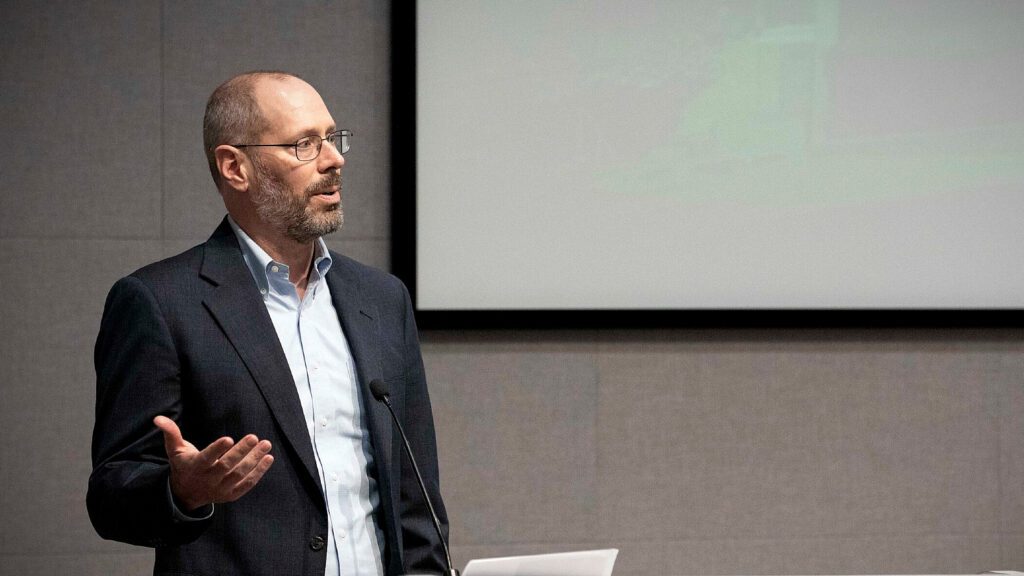
Christopher Lupo Noyce School California Polytechnic CBRS
Lupo – private cellular in CBRS has been a game-changer for Noyce School of Applied Computing at California Polytechnic

Our Digital Transformation Hub has become a true living lab, where students gain real-world experience with private 5G systems they will help build and manage in industry and government. Across campus, research teams working with IoT devices and advanced applications finally have the control, security, and dedicated bandwidth they need. None of this would have been possible without shared spectrum solutions like CBRS.

But that progress is now at risk. Policymakers at the Federal Communications Commission (FCC) and other stakeholders are considering changes to the CBRS band – including higher power levels and relocating existing users – that would fundamentally alter how this shared spectrum works.

This isn’t just about convenience. It’s about competitiveness – and what we stand to lose if these changes move forward. American universities are supposed to lead the world in research and innovation. When our students graduate from Cal Poly, they should understand the wireless infrastructure powering industries like manufacturing, agriculture, entertainment, and defense. When we conduct research, we should have the tools to do it right. CBRS makes that possible today.

What makes CBRS work is its balance. The band is designed for low-power, shared use, protecting incumbent users while enabling new entrants – including universities – to deploy advanced networks. That balance is not accidental; it is what allows a diverse set of users to coexist and innovate. Changing the technical rules would disrupt that balance and degrade the performance that current users depend on.

Proposals to raise power levels or relocate users would do exactly that. Analysis of these proposals shows they would significantly reduce reliability across the band, undermining the very use cases that CBRS was designed to support – from campus networks to industrial and community deployments.

And it’s not just universities that rely on this model. Across California and the country, CBRS supports precision agriculture, school connectivity, industrial operations, and public safety applications. For many of these users, there is no easy substitute.

As policymakers consider the future of spectrum policy, they should start with what is already working. CBRS is working. It is powering research, training the next generation of engineers, and expanding access to advanced wireless capabilities.

The FCC should preserve the current CBRS framework and reject changes that would undermine the low-power, shared model that has made this success possible. California universities helped build the internet once. With the right policies in place, we can help build what comes next.

Christopher Lupo is the Founding Director of the Noyce School of Applied Computing at California Polytechnic State University, where he oversees the development and implementation of shared spectrum technologies, including CBRS, supporting research, student learning and innovation across campus.


You Might Also Like
  • Criss-cross comms – Lumen bets on east-west AI, while the edge keeps north-south in play
  • Fighting talk (and team spirit) – Celona preps private 5G/Wi-Fi for AI scramble in Industry 4.0
  • Thursday (telco diary) | Ghosts in the machine – Wanted: more humans to build AI
  • Lumen ready for AI traffic rush – with programmable fabric and “more fiber than anyone”
  • AI fiber build-out undermines rural BEAD skills-drive
  • Wednesday (telco diary) | Smells like team spirit – and that tech-bro Musk
Share 0 LinkedinEmail
Avatar of RCR Wireless News
Christopher Lupo, Founding Director, Noyce School of Applied Computing, California Polytechnic State University

previous post
Inwit defends tower contracts amid dispute with Italian carriers
next post
The EU AI Act delay buys time – here’s how to use it (Reader Forum)

White Papers

  • Norton eBook: The 2026 Telco Playbook

  • Enea White Paper: Why Intelligent AAA is the Swiss Army Knife of Telecom

  • CSG White Paper: Telco AI Enabler: Mediation’s Defining Role

  • Enea White Paper: Scalable Database Design for 5G and Beyond

  • Supermicro and NVIDIA Whitepaper: Powering sovereign AI at scale

Editorial Reports

  • Report: NTN in motion — evolving standards, expanding services

  • Market Pulse Report: Telco AI in 2026 – Trends, Challenges and Opportunities

  • Nvidia Report: The State of AI in Telecommunications: 2026 Trends

Webinars

  • Webinar: Building 6G — aligning technology, policy and purpose

  • SIMCom Webinar: Scaling your next deployment – from plastic to provisioning

  • Webinar: Rethinking the RAN as AI, cloud and openness converge

  • Webinar: Scale-Up, Scale-Out, Scale-Across – Building AI-Era Network Fabrics

  • Webinar: NTN in motion – evolving standards, expanding services

Since 1982, RCR Wireless News has been providing wireless and mobile industry news, insights, and analysis to mobile and wireless industry professionals, decision makers, policy makers, analysts and investors.

Facebook Twitter Youtube Linkedin Envelope Rss

Useful Links

  • Subscribe
  • About RCR Wireless News
  • Contact Us
  • Advertise
  • Editorial Calendar
  • Archive
  • RSS
  • Wireless News Archive
  • Subscribe
  • About RCR Wireless News
  • Contact Us
  • Advertise
  • Editorial Calendar
  • Archive
  • RSS
  • Wireless News Archive

Edtior's Picks

Lockheed’s NetSense turns Verizon’s 5G network into a drone-tracking system
Criss-cross comms – Lumen bets on east-west AI, while the edge keeps north-south...
Fighting talk (and team spirit) – Celona preps private 5G/Wi-Fi for AI scramble...

Latest Articles

Lockheed’s NetSense turns Verizon’s 5G network into a drone-tracking system
Criss-cross comms – Lumen bets on east-west AI, while the edge keeps north-south in play
Fighting talk (and team spirit) – Celona preps private 5G/Wi-Fi for AI scramble in Industry 4.0
The Agentic Network — T-Mobile US on aligning AI initiatives with customer outcomes

© 2026 RCR Wireless News All Right Reserved. Developed by Eight Hats.

Cookie Policy | Privacy Policy

RCR Wireless
  • News
  • Channels
    • 5G
    • 6G
    • BSS OSS
    • Carriers
    • IoT
    • Network Infrastructure
    • Open RAN
    • Private 5G
    • Telco AI
    • Telco Cloud
    • Test & Measurement
  • Resources
    • Reports
    • Webinars
    • White papers
    • AI Fundamentals
    • Analyst Angle
    • Editorial Calendar
    • Fundamentals
      • 5G NR Release 17
      • AI
        • Telco AI in 2025
    • Podcasts
      • Let’s Get Digital with Carrie Charles
      • Wireless Connectivity to Enable Industry 4.0 for the Middleprise
      • Well Technically…
      • Will 5G Change the World
      • Accelerating Industry 4.0 Digitalization
  • AI Infrastructure
  • Programs
  • Events
  • RCRtv
  • Advertise
  • Subscribe
RCR Wireless
  • News
  • Channels
    • 5G
    • 6G
    • BSS OSS
    • Carriers
    • IoT
    • Network Infrastructure
    • Open RAN
    • Private 5G
    • Telco AI
    • Telco Cloud
    • Test & Measurement
  • Resources
    • Reports
    • Webinars
    • White papers
    • AI Fundamentals
    • Analyst Angle
    • Editorial Calendar
    • Fundamentals
      • 5G NR Release 17
      • AI
        • Telco AI in 2025
    • Podcasts
      • Let’s Get Digital with Carrie Charles
      • Wireless Connectivity to Enable Industry 4.0 for the Middleprise
      • Well Technically…
      • Will 5G Change the World
      • Accelerating Industry 4.0 Digitalization
  • AI Infrastructure
  • Programs
  • Events
  • RCRtv
  • Advertise
  • Subscribe
@2020 - All Right Reserved. Designed and Developed by PenciDesign
